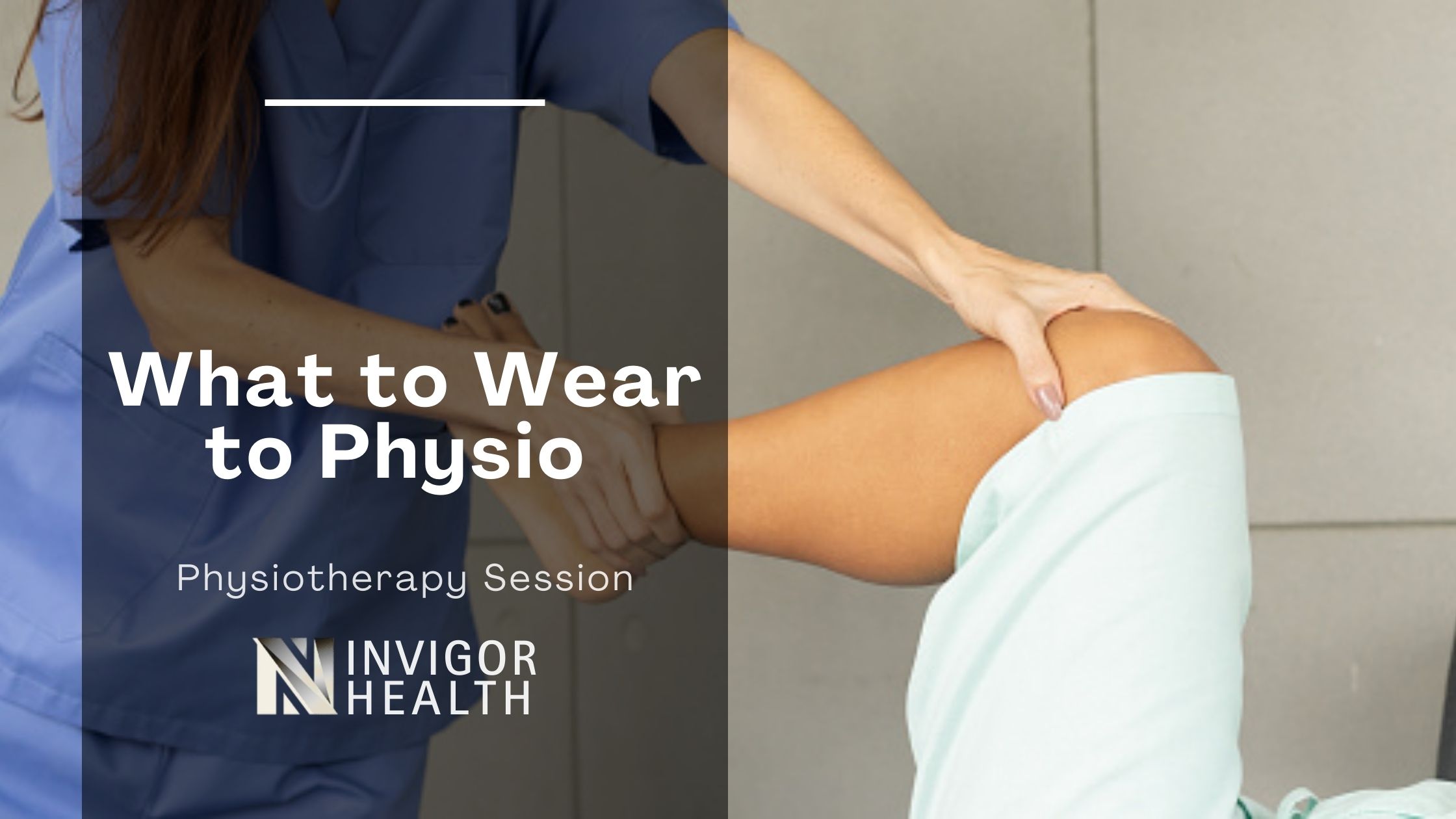
If you’re preparing for your first physiotherapy session, you may be wondering “What should I wear to my first physio appointment?” or even more specific questions like what to wear to physio for knee, for shoulder, for hip, or for lower back pain.
These are extremely common concerns and the good news is that choosing the right clothing is simple.
Your outfit affects your comfort, your movement, and how accurately your physiotherapist can assess the area causing pain. The right clothing can make a big difference, especially during your first assessment.
This guide covers exactly what to wear at physio, what to avoid, what to wear for different body areas like the groin, pelvis, back, or sciatica, and how dressing correctly helps you get more out of your physio session at Invigor Health.
Why Your Clothing Matters During Physiotherapy
Physiotherapy isn’t a passive appointment. Your session may involve movement tests, walking, lifting, stretching, strength exercises, hands-on treatment, and sometimes a gait or posture analysis.
If clothing is too tight or restrictive, it limits how well your physiotherapist can assess your movement.
This matters even more if you’re unsure what to wear to physio for back, sciatica, hip or knee pain, because these areas require very specific movement assessments.
Wearing the right clothing helps because it:
- Allows full range of motion
- Makes it easier for your physiotherapist to access the area
- Prevents irritation on sensitive or injured areas
- Makes you feel more confident and comfortable
- Helps you move naturally during the session
General Clothing Guidelines (What to Wear at Physio)
The easiest rule is: Wear clothes that let you move freely. Good options include:
- Loose tops
- Stretchy shorts, leggings, or track pants
- Supportive sneakers
- Layers you can remove easily
- Clothing that gives access to the area being treated
Avoid tight jeans, dresses, work trousers, belts, bulky jackets, thick jewellery, and stiff or heavy footwear.
If you’re coming straight from work, bring a quick change of clothe, it makes your session smoother and more comfortable.
What to Wear to Physio (Based on the Area You’re Treating)
Your physiotherapist needs to see how your body moves, so the clothing you choose should make the assessment easier, not harder. Here’s a clearer, more natural breakdown of what to wear depending on the area you’re getting treated.
Shoulder, Neck, or Upper Back Physio

If you’ve booked a session for neck or shoulder pain, your physiotherapist will need to look at how your shoulder moves, how your upper back reacts, and how your posture changes with different movements.
This is why choosing the right top is important.
What works well:
- Loose T-shirts that don’t restrict your arms
- Tank tops or vest-style tops
- Light sports tops you can adjust easily
These make it easier for your physio to assess shoulder mechanics and guide you through arm movements without having to constantly move your clothing out of the way.
Knee, Hip, Leg or Groin Treatment

A lot of people ask what to wear to physio for knee, hip, leg or groin pain, and the answer is simple: wear something that allows your physiotherapist to see how your legs and hips move.
Best options:
- Shorts
- Stretchy bike shorts
- Leggings that can roll up comfortably
These areas often require movements like lifting the leg, rotating the hip, bending the knee and checking alignment. Clothing that’s tight, heavy, or difficult to adjust makes that harder and slows the session.
If you’re coming straight from work, bring a pair of shorts in your bag — it makes assessments much easier.
Lower Back, General Back Pain or Sciatica Treatment

If you’re unsure what to wear to physio for lower back or sciatica, think about comfort and access. Your physio will likely check how you bend, twist, and move your hips.
Helpful clothing choices:
- A loose top that lifts easily
- Soft, stretchy pants
- Waistbands that don’t dig into your pelvis
Sciatica assessments involve checking leg tension, hip mobility, and spine movement. Clothing that restricts your waist or doesn’t stretch will affect the accuracy of these tests, so choose something that moves with you, not against you.
Pelvic Floor Physiotherapy or Pelvic Pain
Pelvic sessions focus on breathing, posture, hip control, and how your pelvis moves.
Many people feel unsure about what to wear to pelvic floor physio, but it’s easier than you think.
Wear:
- Comfortable, loose clothing
- Shorts or leggings that allow full hip movement
- Clothing that keeps your lower abdomen accessible
You don’t need anything special — just something you feel relaxed and comfortable moving in. Tight or formal clothing can make pelvic assessments harder and more uncomfortable.
How the Right Clothing Improves Your Physio Session at Invigor Health
At Invigor Health, every session includes a mixture of hands-on therapy and movement-based assessment.
Whether you’re being treated for knee pain, shoulder stiffness, hip tightness, pelvic concerns, or sciatica, the right clothing helps us assess:
- How your joints move
- How your muscles activate
- How your body responds to different positions
- Whether your pain changes with movement
- How your posture affects your symptoms
Our aim isn’t to make you “look sporty.”
We aim to help you move well, recover faster, and understand your body better — and the right outfit is just one small step in that journey.
If you’re ready to get started, you can book your physiotherapy appointment with us anytime.
