Hip pain usually gets worse when the joint and surrounding muscles lose strength, control, or tolerance to load. That is why the best plan is rarely “just stretching”. In most cases, you need a mix of mobility + glute strength + hip stability to support the hip during walking, stairs, gym training, and sports.
First, What type of hip pain do you have?
Your symptoms guide which exercises matter most:
- Side hip pain (outer hip): often linked to glute tendon overload and lateral hip pain patterns (commonly discussed as GTPS). Strengthening hip pain while sitting is usually key.
- Groin or front hip pain: can be linked to hip flexors, joint irritation, OA patterns, or impingement-type mechanics.
- Buttock pain: may be referred from the low back or deep hip rotators.
If you cannot weight-bear, had a major fall, feel severe night pain, or have numbness/weakness down the leg, get assessed promptly.
8 Physio Exercises for Hip Pain (choose your level)
Here are some Physio exercises to relieve Hip pain and overall stability.
1) Glute bridge (foundation strength)
What it targets: glutes, hip extension strength, pelvic control
How to do it:
- Lie on your back, knees bent, feet hip-width.
- Squeeze glutes, lift hips, pause 2 seconds, lower slowly.
How Many Sets: 2–3 sets of 8–12
Commonly used in lateral hip pain programs.

2) Side-lying hip abduction
What it targets: gluteus medius/minimus (hip stability)
How to do it:
- Lie on your side, top leg straight, toes facing forward.
- Lift the leg without rolling the pelvis back.
How Many Sets: 2–3 sets of 8–12
AAOS rehab programs commonly include hip strengthening progressions.
3) Clamshell
What it targets: external rotators + glute med support
How to do it:
- Lie on your side, knees bent, heels together.
- Open the top knee without twisting your hips.
How Many Sets: 2–3 sets of 10–15
4) Sit-to-stand (chair stand)
What it targets: glutes, quads, real-life function
How to do it:
- Stand up from a chair without using your hands if possible.
- Control the lowering phase back down.
How Many Sets: 2–3 sets of 6–10
5) Hip flexor stretch (only if front hip feels tight)
What it targets: hip flexor length tolerance
Keep it gentle and avoid pinching in the front of the hip. Mayo-style exercise sheets often include hip flexor stretching as part of lower-limb programs.
How Many Sets: 20–30 seconds, 2–3 reps

6) Glute stretch (if buttock feels tight)
What it targets: glute/piriformis area comfort
How Many Sets: 20–30 seconds, 2–3 reps
7) Step-up (progression for stairs and walking tolerance)
What it targets: single-leg strength + hip control
How to do it:
- Use a low step.
- Knee tracks over toes, pelvis stays level.
How Many Sets: 2–3 sets of 6–10 each side
8) Single-leg balance (control and stability)
What it targets: hip stabilisers and foot-hip coordination
How to do it:
- Stand on one leg near a wall.
- Keep pelvis level and ribs stacked over hips.
How Many Sets: 3 x 20–30 seconds
A simple 2–3 week plan (that most people can follow)
- Mobility (daily): 1–2 gentle stretches if they feel relieved
- Strength (3–4 days/week): bridges + clamshells + side-lying abduction + sit-to-stand
- Control (3–4 days/week): single-leg balance + step-ups (as tolerated)
Progress rule: mild discomfort is okay, but pain should settle within 24 hours. If it ramps up and stays worse, reduce range, reps, or frequency.
NHS hip pain exercise resources commonly emphasise strengthening and staying within tolerable limits.
Common mistakes that keep hip pain going
- Doing only stretching while avoiding strength work
- Pushing into sharp pain or pinching at the front of the hip
- Doing lateral hip pain exercises incorrectly (pelvis twisting, using back muscles instead of glutes)
- Increasing walking, running, or gym load too quickly
How we treat hip pain at Invigor Health
If your hip pain keeps returning, it usually means something is still missing: strength, control, load management, or the right diagnosis.
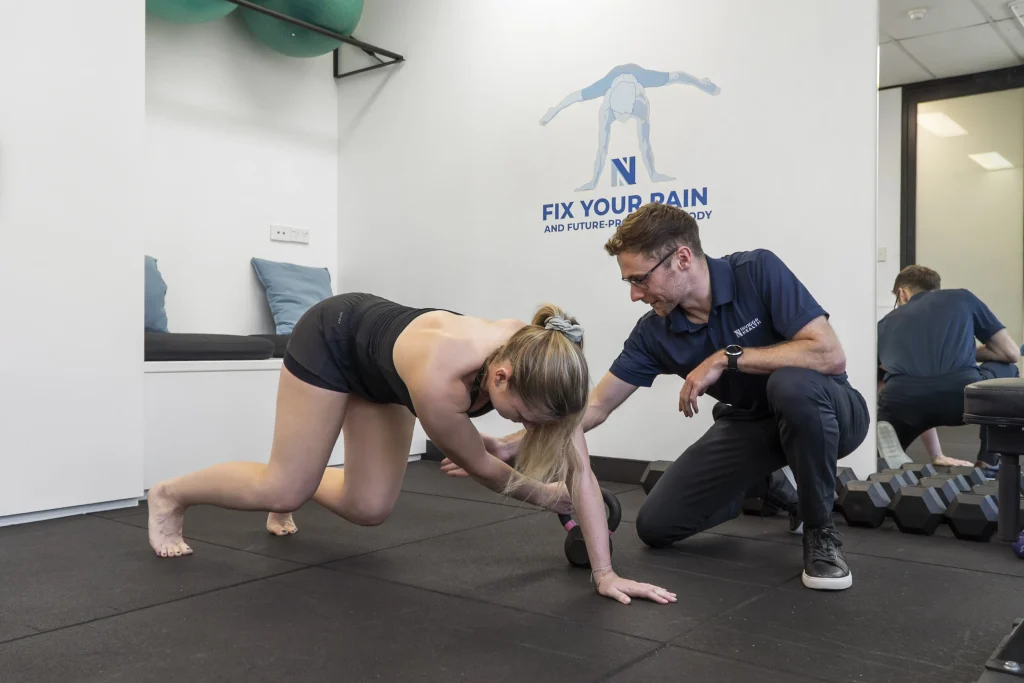
At Invigor Health, we assess how your hip behaves during real movements (walking, squats, stairs, running, if needed), then build a plan combining targeted hands-on Physio treatment (when appropriate) and progressive rehab exercise so you can return to normal life and training with confidence.
- Physio Treatment in Bondi Junction: ideal for active people who want a clear return-to-gym or return-to-sport plan.
- Physio Treatment in Maroubra: strong focus on rehab for older adults and post-surgical recovery (including hip replacement pathways).
We also offer Telehealth physiotherapy when you need guidance from home.
