
Back pain is one of the most common reasons people search for help online, visit their GP, or book a physiotherapy session. Whether it’s a sudden strain from the gym, tightness from long hours sitting at work, or chronic lower back pain that won’t go away, back pain physiotherapy remains one of the most effective, evidence-based treatments. At Invigor Health, our physiotherapists at Bondi Junction & Maroubra clinic diagnose the root cause, provide hands-on spine physiotherapy, and build personalised exercise programs that relieve pain and prevent flare-ups.
What Causes Back Pain? (The Real Reasons It Starts)
Most back pain isn’t caused by a single issue; it’s usually a combination of factors related to posture, movement, strength, and lifestyle. Common causes include muscle strain, weak glutes or core, prolonged sitting, disc irritation, facet joint stiffness, nerve compression, and age-related changes. Younger patients often experience sports-related pain, while older adults deal with chronic stiffness or arthritis.
How Physiotherapy Helps Back Pain
People frequently ask: is physiotherapy good for back pain? Absolutely. Modern evidence strongly supports physiotherapy for back pain as a long-term solution. Physiotherapy helps through accurate diagnosis, manual therapy, strengthening exercises, mobility work, posture correction, and long-term prevention strategies. It builds spinal stability, reduces inflammation, restores movement, and teaches better habits to stop pain from returning.
Best Physiotherapy Exercises for Back Pain
These foundational exercises are often used in physio back pain programs: Cat-Cow for spinal mobility, Child’s Pose for gentle stretching, Glute Bridges for glute activation, Bird-Dog for core stability, McKenzie Extensions for disc-related pain, and Dead Bugs for deep core strength.
Spine Physiotherapy for Sciatica & Nerve Pain
Sciatica occurs when the sciatic nerve becomes irritated. Spine physiotherapy for nerve pain treats sciatica using nerve glides, spinal mobility training, hip and core strengthening, postural therapy, and manual techniques to decompress irritated structures.
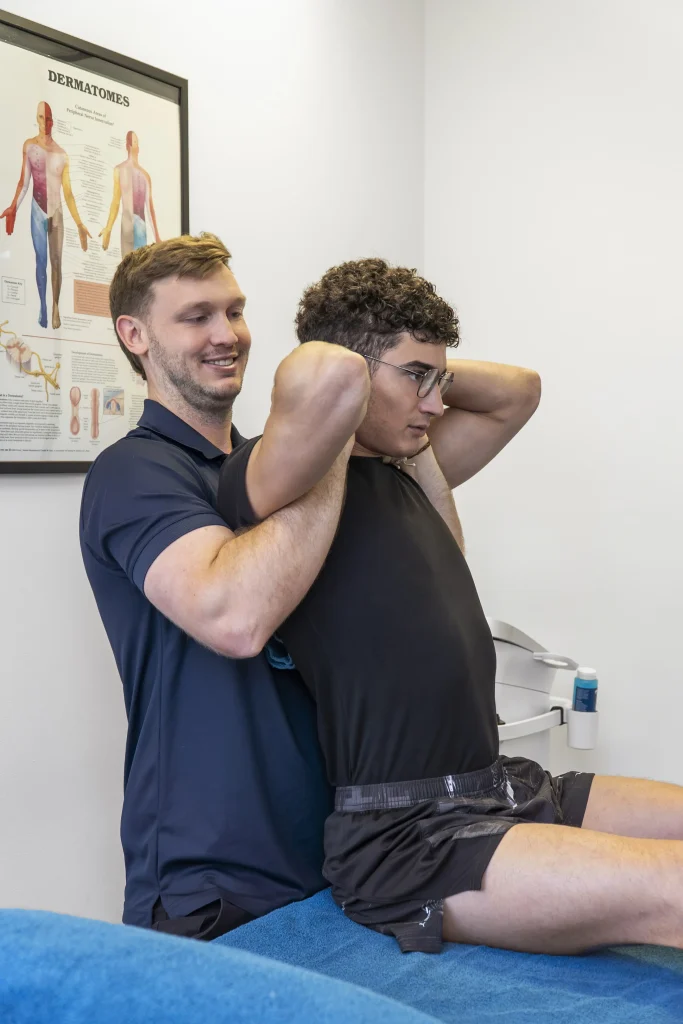
Chronic Back Pain: Why It Lasts & How Physio Treats It
Chronic pain is often due to prolonged movement habits, lifestyle load, muscle imbalances, spinal stiffness, and reduced strength. Physiotherapy addresses these issues with targeted strengthening, movement retraining, and long-term recovery strategies.

When to See a Physiotherapist
You should seek back pain physiotherapy if pain lasts more than a week, keeps returning, radiates down the leg, affects your ability to move, or worsens with gym training. Red flags requiring medical attention include severe night pain, loss of bladder control, and major trauma.
Physio vs Chiro for Back Pain
Physiotherapy is ideal for exercise rehab, strengthening, and long-term recovery. Chiropractic care focuses on joint alignment and spinal mobility. At Invigor Health, both can be combined for full spinal care.
How Long Does Recovery Take?
Many people feel improvement within 1–3 sessions. Most recover within 4–8 weeks with consistent treatment, though chronic cases may require longer.
Back Pain Treatment at Invigor Health
Invigor Health offers personalised physiotherapy for back pain, utilising sports physiotherapy principles, movement screening, manual therapy, strength-led rehabilitation, and biomechanical analysis—providing you with faster pain relief, safer movement, and long-term resilience. Our approach restores mobility, improves posture, strengthens weak areas, corrects faulty movement patterns, and reduces the risk of recurring flare-ups. You don’t just feel better, you move better, lift better, run better, and stay pain-free for the long haul.
Frequently Asked Questions
Does physiotherapy help with back pain?
Yes. Physiotherapy is one of the most effective long-term treatments for back pain, improving both pain and movement.
Is physiotherapy good for back pain caused by sitting?
Absolutely. Physio corrects posture, strengthens stabilisers, and reduces stiffness.
How often should I see a physio for back pain?
Most patients benefit from weekly sessions initially, followed by spaced-out visits as symptoms improve.
What is spine physiotherapy?
Spine physiotherapy refers to targeted treatment for the neck, mid-back, and lower back using manual therapy, strengthening, and mobility techniques.
Can physiotherapy help sciatica?
Yes. Physio can help Sciatica nerve glides, mobility work, and strengthening are key components of sciatic pain relief.
Should I see a physio or chiro for my back?
Both can help, but physiotherapy offers long-term solutions through strength and movement retraining.
How long does back pain physiotherapy take to work?
Many people feel improvement within 1–3 sessions, with long-term change happening over 4–8 weeks.
