
Bondi Junction trains hard. From early morning strength sessions to evening conditioning classes, the local fitness culture keeps pushing forward. We see runners preparing for half marathons, professionals squeezing in high-intensity sessions after work, and hybrid athletes combining heavy lifts with fast intervals.
At our Bondi Junction physiotherapy clinic, the pattern feels clear. Most injuries in 2026 do not come from one big accident. They build slowly. Load increases. Recovery drops. Technique slips. Pain starts as a small warning and turns into something that stops training altogether.
Here is what we are seeing most often in the gym and why it keeps happening.
Shoulder Pain from Overhead Lifting
Overhead training remains popular across Bondi Junction. Push presses, snatches, kipping pull-ups, and high-volume bench sessions dominate weekly programs. When volume climbs too quickly, the shoulder struggles to keep up.
Common presentations include:
- Rotator cuff irritation
- AC joint pain at the top of the shoulder
- Pain during pressing or lowering weights
- Clicking or weakness in the overhead range
Many active clients also spend long hours at a desk near Westfield Bondi Junction. Rounded shoulders and tight chest muscles change shoulder mechanics before they even enter the gym. When they load overhead movements on top of that posture, the joint starts to complain.
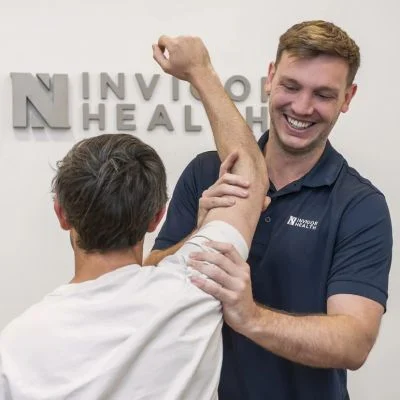
What people often get wrong:
- They stretch only and ignore strength deficits
- They stop pressing completely instead of modifying the load
- They rely on massage without rebuilding capacity
At Invigor Health, physio clinic, we focus on:
- Restoring shoulder control under load
- Strengthening the rotator cuff in functional ranges
- Improving thoracic spine mobility
- Rebuilding pressing tolerance step by step
Shoulder pain rarely resolves with rest alone. Structured rehab restores strength and confidence so you can train properly again.
Tendon Pain That Will Not Settle
Tendon pain stands out as one of the biggest trends this year. We see it in the Achilles, patellar tendon, elbow, and gluteal region. Many gym members describe the same story. The pain feels manageable at first. It warms up during training. It flares the next morning.
Typical tendon presentations include:
- Achilles pain during skipping or sprint work
- Patellar tendon pain with squats and lunges
- Elbow pain during pulling or gripping
- Lateral hip pain after running or step-ups
Tendon tissue reacts to load. It does not respond well to complete rest. When someone stops training for two weeks, the pain may reduce. Once they return to full intensity, the pain returns stronger.
In 2026, hybrid training has increased tendon stress. Many Bondi athletes combine:
- Heavy lifting
- Running intervals
- Plyometrics
- High-rep conditioning
Without planned load progression, tendons fail to adapt.
At our sports physiotherapy clinic in Sydney, we rebuild tendon capacity with:
- Gradual loading programs
- Isometric and heavy slow resistance work
- Clear training modifications
- Measured return to sport progressions
This approach fits with our focus on long-term resilience. We do not aim for short-term relief only. We rebuild strength so the tendon tolerates future training.
Lower Back and Hip Overload in Hybrid Athletes
Hybrid training continues to grow across the Eastern Suburbs. Many athletes now lift heavy three days a week and run on alternate days. Others combine CrossFit-style conditioning with long runs around Centennial Park. This style of programming demands strength, endurance, and control at the same time. Physiotherapists benefit athletes by helping them manage load, refine movement patterns, and build the strength capacity needed to handle this intensity without repeated setbacks.
The hip and lower back often take the hit.
We commonly see:
- Lower back tightness after deadlifts
- Hip pinching during squats
- Pain when transitioning from sitting to standing
- Stiffness after long training blocks
These presentations rarely involve serious structural damage. In most cases, they reflect overload, reduced mobility, and poor movement control under fatigue rather than a major injury.
This is where targeted physio for back pain becomes important. Instead of just easing symptoms, we assess how your hips, core, and thoracic spine work together under load. We then adjust technique, rebuild strength and endurance, and improve control so your lower back can tolerate training demands without recurring flare-ups.
Key contributors include:
- Reduced hip mobility from prolonged sitting
- Weak posterior chain endurance
- Fatigue during high-volume sessions
- Inconsistent recovery habits
Instead of stopping training completely, we adjust:
- Volume and frequency
- Technique cues
- Strength balance between the front and back chains
- Core endurance under load
A tailored rehab plan helps you return to lifting without constant flare-ups.
Ankle and Calf Injuries from Running and Conditioning
We see a steady rise in ankle and calf injuries among Bondi Junction gym members who reintroduce running. Some train for local events. Others add treadmill intervals after strength sessions.
Common issues include:
- Recurring ankle sprains
- Calf strains
- Achilles stiffness
- Plantar heel pain
Many of these clients sprained an ankle years ago. They never completed structured rehab. They returned to sport once the swelling settled. The ankle remained weak. Over time, compensations developed.
Running assessments at our Bondi Junction clinic often reveal:
- Poor ankle control
- Reduced calf strength endurance
- Limited ankle dorsiflexion
- Asymmetry between legs
We correct these deficits with:
- Balance and proprioception training
- Progressive calf strengthening
- Gait analysis and technique adjustments
- Clear return-to-run frameworks
An ankle that feels “mostly fine” often hides measurable weakness. Addressing it early prevents repeat injury.
The Desk-to-Gym Problem
One of the biggest injury drivers in Bondi Junction does not happen in the gym. It happens at work.
Many professionals:
- Sit for 8 to 10 hours
- Travel long commutes
- Train intensely after work
This sharp contrast between inactivity and explosive training stresses the body. Tight hip flexors limit squat depth. Weak mid-back muscles reduce shoulder stability. Reduced core endurance affects lifting form.
The body struggles to transition from desk posture to high-output training without preparation.
We often advise:
- Short mobility breaks during the workday
- Gradual warm-up progression before heavy sets
- Load management across the week
- Periodised training blocks
This approach supports performance and reduces overuse injuries.
When Should You Modify Training?
Pain does not always mean you must stop. It does signal that something needs adjustment.
Consider booking an assessment if you notice:
- Pain that lasts longer than 7 to 10 days
- Morning stiffness that worsens
- Strength dropping on one side
- Recurrent flare-ups during similar exercises
- Ongoing reliance on strapping or pain relief
Early assessment prevents small issues from becoming chronic problems. Most gym injuries respond well when addressed early.
How We Approach Gym Injuries in Bondi Junction
At Invigor Health, we combine hands-on therapy with structured rehabilitation. We identify the root cause. We measure strength and movement capacity. We design a plan that fits your training schedule.
Our approach includes:
- Thorough movement assessment
- Clear explanation of your condition
- Targeted manual therapy
- Progressive strengthening programs
- Return-to-performance benchmarks
We do not rely on endless maintenance sessions. We aim to restore function and build resilience so you can train confidently.
Our clinic sits in the heart of Bondi Junction, close to Westfield and public transport. Many clients schedule sessions before or after work, or around training blocks.

Summary:
Sydney’s training culture continues to evolve. The intensity has increased. Hybrid programming challenges both strength and endurance. Without structured load management, the body struggles to adapt.
Most gym injuries in 2026 rarely come from one dramatic moment. They develop over time as load increases and recovery falls behind. Small warning signs often appear well before pain becomes limiting.
If something feels different during training, it helps to assess it early rather than pushing through and hoping it settles. A structured physiotherapy assessment can clarify what is happening, identify the underlying cause, and outline practical steps to keep you training safely.
If you would like guidance specific to your program, you can arrange an appointment at our Bondi Junction clinic to review your movement, strength, and load management in detail. Book an appointment to get started.
