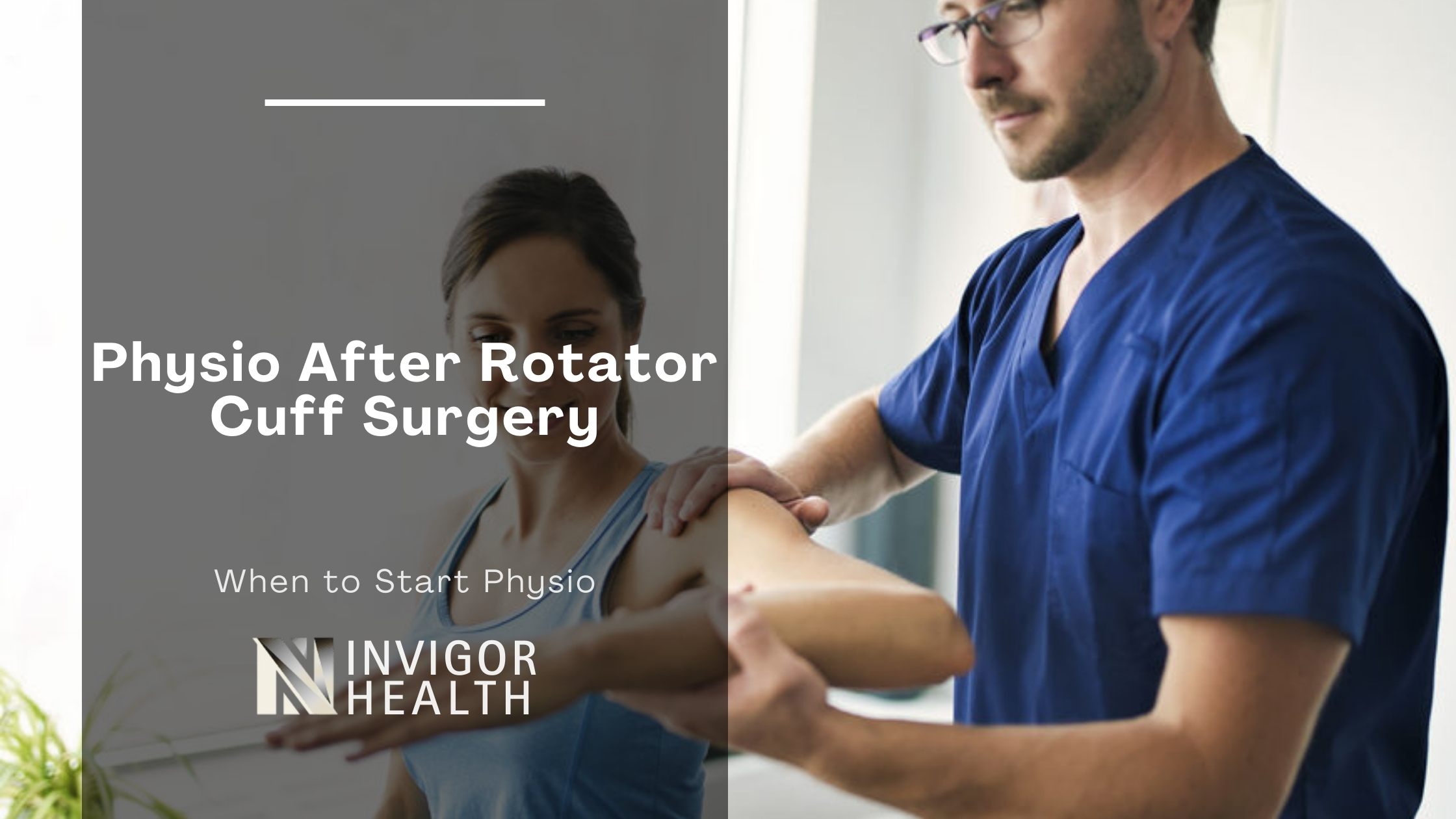
If you are asking when to start physio after rotator cuff surgery, the short answer is: physiotherapy usually begins early, often within the first few weeks. But early does not mean heavy exercise. It means guided, staged rehabilitation that protects healing tissue.
After a rotator cuff repair, your tendon needs time to heal back onto the bone. Starting the wrong movement too soon can increase re-tear risk. Starting too late can lead to stiffness and loss of shoulder mobility.
That is why physio after rotator cuff surgery follows a structured timeline. Each phase builds on the last.
When Does Physiotherapy Start After Rotator Cuff Surgery?
In most cases, physiotherapy treatment after rotator cuff surgery starts within the first 1 to 2 weeks. However, the early phase focuses on:
- Protecting the repair
- Managing pain and swelling
- Educating you on sling use
- Maintaining movement in the elbow, wrist, and hand
You may not move your shoulder actively at this stage. Instead, your physio guides you through safe, controlled steps. The exact timing depends on:
- Type of rotator cuff repair
- Tear size (small vs large or massive tear)
- Surgeon instructions and rehabilitation protocol
Why Rehab Starts Early but Progresses Slowly
After an arthroscopic rotator cuff repair, the tendon needs time to heal securely back to the bone. In the early weeks, the repair is still vulnerable and not strong enough to handle a load, so pushing too hard can disrupt healing. At the same time, avoiding movement completely can lead to stiffness and limit long-term shoulder mobility.
This is why rehabilitation begins early but progresses in a controlled way. The goal is to maintain safe movement without placing stress on the repair. Your physio guides this balance, helping you move forward at the right pace while protecting the healing tendon.
What Happens in the First 2 Weeks After Surgery?
This phase focuses on protecting the repair and controlling shoulder pain after surgery. You will wear a sling or shoulder immobiliser and follow guidance on safe positioning and sleep. Movement is limited to the hand, wrist, and elbow to prevent stiffness. If cleared, your physio may introduce gentle passive movements, but you do not actively lift your arm at this stage.
Passive vs Active Movement After Rotator Cuff Repair
Understanding this is key to a safe recovery.
Passive range of motion
- Your shoulder is moved without using your muscles
- Done by a physio or assisted movement
- Protects the healing tendon
Active assisted range of motion
- You begin to help the movement
- Uses tools like a stick or the other arm
- Still controlled and low load
Active range of motion
- You lift your arm using your own muscles
- Introduced later when the repair is stronger
Strengthening phase
- Resistance exercises begin
- Focus on shoulder strength and scapular control
Starting active or strengthening exercises too early can increase stress on the repair. Timing matters.
Typical Rotator Cuff Surgery Rehab Timeline
This is a general rotator cuff surgery rehab timeline. Your plan may vary.
Weeks 0 to 2
- Sling or shoulder immobiliser full-time
- Pain and swelling management
- Hand, wrist, and elbow movement
- Possible early passive motion after rotator cuff repair
Weeks 2 to 6
- Continue protection phase
- Increase passive range of motion
- Begin active assisted range of motion
- Focus on posture and gentle scapular control
Weeks 6 to 12
- Start active motion after rotator cuff surgery
- Gradual increase in shoulder movement
- Introduce light strengthening
- Improve control and coordination
Months 3 to 6 and Beyond
- Progress strengthening after rotator cuff repair timeline
- Build shoulder strength and endurance
- Return to work tasks, driving, gym, and sports
Full recovery can take several months. Some cases take longer, especially with larger tears.
What Changes the Timing of Physio After Rotator Cuff Surgery?
There is no single timeline that fits everyone. Your rotator cuff repair physiotherapy timeline depends on:
- Tear size. Small tears progress faster, while large or massive tears need longer protection
- Tissue quality and healing response
- Surgical technique
- Whether other procedures were done
- Age and activity level
- Surgeon preferences and protocol
At Invigor Health, our expert Maroubra physiotherapists adjust your plan based on how your shoulder responds, not just a fixed timeline.

How Physiotherapy Helps You Recover Safely
Shoulder physiotherapy is not just exercise. It is a guided process. At Invigor Health, your rehab includes:
- A personalised guided exercise program
- Progression based on healing stages
- Manual therapy, where appropriate
- Focuses on shoulder mobility, shoulder strength, scapular control, and functional recovery
The aim is not just movement. It is safe to return to daily life.
When to Contact Your Physio or Surgeon
Seek advice from our physiotherapists in Bondi if you notice:
- Sudden increase in pain
- Inability to move your arm
- Signs of infection
- Persistent swelling
- Concerns about your exercises
Regular follow-up ensures your rehab stays on track.

Book Post-Surgical Shoulder Physio at Invigor Health
Recovering from rotator cuff surgery takes time and the right plan. At Invigor Health Maroubra and Bondi Junction, we provide:
- Structured post-surgical rehabilitation
- Experience in shoulder reconstruction rehab
- Individual plans based on your surgery and progress
If you are unsure when to start physiotherapy after rotator cuff surgery, we guide you through each phase safely.
Book your physio session today and start your recovery with confidence.
