There’s nothing quite like it. Finding your rhythm on a run until that familiar twinge shows up on the outside of your knee. You slow down, hoping it’ll ease off, but it only gets sharper. Maybe you cut the run short, hoping a few days off will sort it. Then next time? It’s back again.
If this sounds like you, there’s a fair chance you’re dealing with ITB Syndrome — and it’s something we see all the time here at Invigor Health, especially among runners training in the Eastern Suburbs, around Bondi Junction and Maroubra.
The good news is that ITB syndrome is highly treatable. With the right physiotherapy approach, we identify why the irritation keeps returning, address the movement and load issues driving it, and guide you back to running without recurring knee pain.
What Actually Is ITB Syndrome?
The iliotibial band (or ITB) is a thick strip of tissue that runs down the outside of your thigh, from your hip to your knee. It helps stabilise your leg when you walk, run, or cycle. But when it’s under too much strain, it can start to rub against the outside of your knee — and that’s when pain sets in.
This usually starts off as a niggle and gets progressively sharper as you run. You might not feel it walking around, but once you hit a certain pace or distance, it flares up. That’s ITB Syndrome.
Common Signs You’re Dealing with ITBS
Here’s how it often shows up:
- A sharp, burning pain on the outside of the knee while running
- It usually kicks in after a few minutes or kilometres.
- It can get worse going downhill or downstairs
- It sometimes feels like a tight band down the outside of the thigh
- Once you stop running, the pain often eases off until the next time
It’s a frustrating cycle, especially if you’re building towards a race or trying to stay consistent with your training.
Why Does It Happen?
The short answer? Your body is trying to keep up with what you’re asking of it, and something’s not quite holding up its end.
Here are a few common culprits:
- A big jump in running load, longer distances, more hills, and not enough recovery.
- Weakness in the hips or glutes, which throws off your leg mechanics.
- Repeating the same type of run over and over (especially if it’s on uneven ground or always the same side of the road).
- Worn-out shoes, or shoes that just don’t suit your running style.
- A running technique that puts too much pressure on the outside of your knee.
Most of the time, it’s not one single thing — it’s a combination of little things that build up.
How Physio Can Actually Help?
At Invigor Health, we’re not just about short-term fixes — we’re here to figure out why the pain started and what it’ll take to get you back running comfortably and consistently.
Here are all the steps involved in treating syndrome with physiotherapy:
A proper look at how you move
We check how your hips, knees, and feet work together when you run or squat. Often, the issue isn’t where the pain is — it’s somewhere upstream.
A strength plan that actually makes sense for you
We focus on building strength where it matters — mostly around your hips, glutes, and core — so your body can
handle the loads of running without overloading the ITB.
Hands-on treatment to ease tight spots
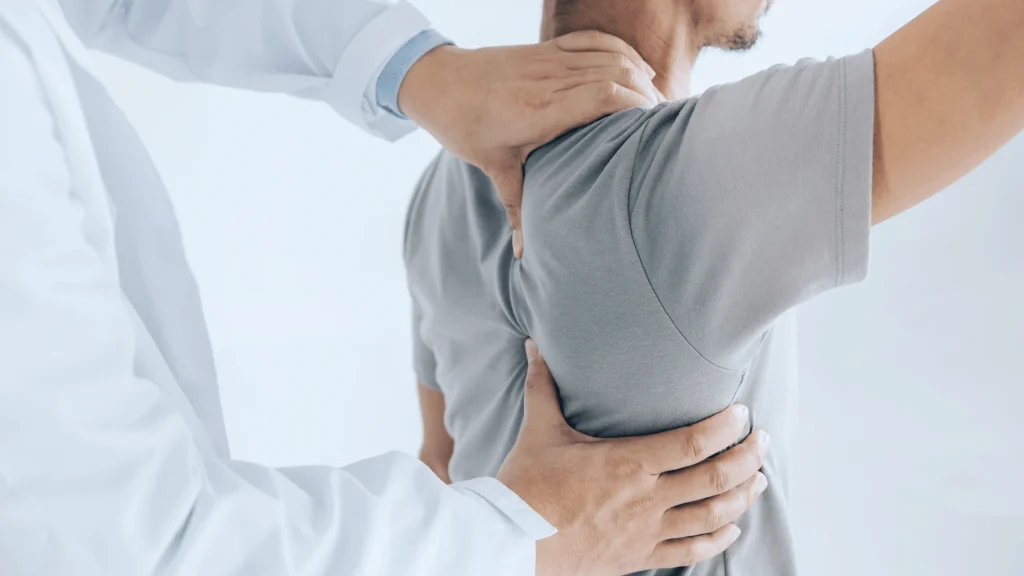
Hands-on treatment helps ease tight or overloaded areas around the knee. This may include soft tissue work, targeted massage, or muscle release techniques to settle pain and reduce tension. While these approaches calm things down in the short term, they work best alongside a structured strengthening plan. This balanced approach is a core part of effective physio treatment for knee pain, allowing symptoms to ease while the knee builds the support it needs to cope with daily movement and load.
Small tweaks to how you run
You don’t need to reinvent your
stride, but sometimes a slight change in cadence or posture can take pressure off the outside of your knee. We’ll help you figure out what works for your body.
A sensible return-to-running plan
No guesswork, no boom-and-bust cycle. Just a gradual build-up that helps you stay consistent and pain-free.
You’ve probably seen people roll the side of their leg like they’re trying to iron out a wrinkle. Truth is, you can’t actually “loosen” the IT band — it’s not a muscle. But foam rolling the muscles around it (like your glutes and outer quads) can help. We’ll show you how to do it in a way that actually feels good and supports your recovery.

Don’t Just Push Through It
If your knee’s been giving you grief every time you run, it’s probably not going to sort itself out with just a few days off. But with the right support and a bit of guidance, you can get past it — and often come back stronger than before.
We’ve helped runners of all levels in Bondi Junction, Maroubra, and around the Eastern Suburbs get back on track — from first-time 5K runners to seasoned marathoners.
Let’s Get You Running Again (Without the Knee Pain)
If this sounds like what you’ve been dealing with, we’re here to help. Book an appointment with our Bondi Junction physio team. And, if you’re from Maroubra, book a session with Invigor Health’s Maroubra physio.
Let’s figure out what’s going on, what your body needs, and how to get you back out there — pain-free and confident.
