Top 5 Physio-Approved Running Routes in Bondi & Maroubra

Enjoy the run, dodge the injury. Whether you’re training for your next half-marathon or just out for some fresh sea air, the Eastern Suburbs offers some of Sydney’s most scenic (and surprisingly joint-friendly) running routes. As physiotherapists at Invigor Health, we see a lot of running-related injuries—and often, the terrain you’re pounding can play a big role. Here are five local routes we often recommend to clients because they combine safe surfaces, great scenery, and smart elevation changes to help keep your body moving well and pain-free. 1. Bondi to Bronte Coastal Walk (Paved Path Option) Distance: ~2.5 km one waySurface: Mostly paved with short sections of stairsBest for: Beginners, recovery runs, and post-injury return-to-run plans This one’s a classic, but there’s a reason why: the coastal views are unmatched, and it’s a smooth, even surface when you stick to the footpath. It’s not ideal for sprint efforts due to foot traffic, but for slow, steady efforts or rehab jogs, it’s gold. Physio Tip: If you’re returning from injury, walk the stairs and use the flatter sections for intervals. 2. Centennial Park Loop Distance: ~3.8 km loopSurface: Soft gravel and paved optionsBest for: Mid-distance efforts, tempo runs, joint-friendly terrain One of the most forgiving running surfaces in Sydney. The wide loop, minimal elevation change, and option to run on softer bridle paths makes this a favourite for runners dealing with knee, hip, or foot niggles. Physio Tip: Mix up your direction each lap to avoid overloading one side of your body from constant camber. 3. Maroubra to Malabar Headland Trail Distance: ~5 km returnSurface: Boardwalk and trailBest for: Trail runners, strengthening ankles, scenic runs This lesser-known gem is perfect for runners looking to build some trail fitness. It’s undulating, a little technical in parts, and the ocean views are stunning. Excellent for runners looking to improve balance, proprioception, and lower limb control. Physio Tip: Watch your footing—especially if you’ve had ankle sprains before. Trail shoes help! 4. Bondi Beach Promenade Sprints Distance: 1 km length of the beachSurface: Smooth concreteBest for: Sprint intervals, running drills, warm-ups Flat, well-lit, and easy to access—it’s a perfect spot for those short and sharp sprint sets. We love prescribing runners technical drills like A-skips, high knees, and strides along this stretch. Physio Tip: Use this space to work on your running form—upright posture, midfoot strike, and cadence control. 5. Heffron Park Circuit – Maroubra Distance: ~3.2 km loopSurface: Combination of paved paths and grassBest for: Conditioning runs, fartlek training, soft surface running Great for injury prevention and cross-training, Heffron Park has well-maintained grass fields and running tracks that are kind on the joints. Plenty of room to vary pace and direction without traffic or tripping hazards. Physio Tip: Alternate between grass and path each lap to build lower limb adaptability and reduce repetitive strain. Why Your Running Route Matters Many runners underestimate how much terrain, elevation, and surface can influence their injury risk. Uneven or overly hard surfaces can overload the knees, hips, and feet—especially if you’re increasing your mileage or coming back from injury. At Invigor Health, we work with runners of all levels to ensure their training supports both performance and longevity. Whether it’s fixing stride mechanics, addressing postural imbalances, or guiding you through a safe return to running, we’ve got your back (and knees, and feet). Need Help With a Running Injury? Visit us at Invigor Health in Bondi Junction or Maroubra for tailored physiotherapy care. Let’s keep you moving well—so you can keep enjoying the runs you love. Bondi Junction & Maroubra ClinicsBiomechanical Running Assessments AvailableBook Online or Give Us a Call
Surf’s Up: How to Keep Your Shoulders Happy in the Water

Physio tips for local surfers who’d rather be in the lineup than laid up with an injury If you live anywhere near Bondi or Maroubra, there’s a good chance surfing’s part of your weekly rhythm — maybe even your daily one. There’s nothing like that pre-work paddle or sneaking out for a few waves when the winds swing offshore and the banks are lining up. But if you’ve ever had that dull shoulder ache after a longer session, or felt a pinch mid-paddle that didn’t quite go away — you’re definitely not alone. At Invigor Health, we see loads of surfers dealing with sore shoulders, tight necks, and general paddling fatigue. The thing is, most of these injuries aren’t caused by one big wipeout — they build up over time, usually from repeating the same movements without enough support or strength around the joint. The good news? You can totally stay on top of it with a few smart strategies. So, What’s Actually Going on With Surf Shoulders? Surfing demands a lot from your shoulders — especially when you’re paddling. That repetitive overhead motion can really add up, especially if your rotator cuff or upper back muscles aren’t pulling their weight. Over time, that can lead to things like: It doesn’t mean you have to stop surfing — it just means your body’s asking for a little backup. How to Look After Your Shoulders (So You Can Keep Surfing) 1. Strengthen the Muscles Behind You A lot of us naturally overuse the muscles at the front (like the chest and front shoulders) and forget about the ones behind the scenes — literally. To help stabilise the shoulder and paddle more efficiently, you’ll want to strengthen the muscles around your shoulder blades and upper back. Some of our favourite go-to’s: Tip: Keep it light and controlled — it’s not about lifting heavy, it’s about control and endurance. 2. Free Up Your Upper Back If your thoracic spine (the middle part of your back) is stiff, your shoulders will try to compensate — and that’s when trouble starts. A few simple mobility moves before or after a surf can make a real difference: Even just a couple of minutes helps. 3. Fine-Tune Your Paddling Technique Most of us don’t think about paddling technique — we just do it. But small changes can help you avoid overloading your shoulders: And if you’re feeling gassed halfway through a session, chances are your shoulders are working harder than they need to be. 4. Balance Out Your Land-Based Training Surfing naturally puts you into a rounded posture — head forward, chest tight, back stiff. So it makes sense to counter that on land. Try: You don’t need a full gym setup — a resistance band and a bit of space can go a long way. When’s the Right Time to See a Physio? Honestly — earlier is better. If you’ve got shoulder pain that’s sticking around, or you’re feeling less stable or powerful in the water, getting on top of it now can stop it becoming something that sidelines you. At Invigor Health, we work with lots of local surfers — from weekend cruisers to serious shortboarders. Whether you need a rehab plan, some help with technique, or just want to feel stronger paddling out, we can help. Surf Pain-Free (and Paddle for Longer) Your shoulders are doing a lot of work out there. Let’s make sure they’re up for it. Come see us at Invigor Health in Bondi Junction or Maroubra — we’ll get you sorted with a tailored plan so you can stay out in the lineup longer, with less pain and more power. Bondi Junction & MaroubraSurf-specific shoulder careEasy online bookings available
Struggling with a Stubborn Injury? Shockwave Therapy Might Be The Answer
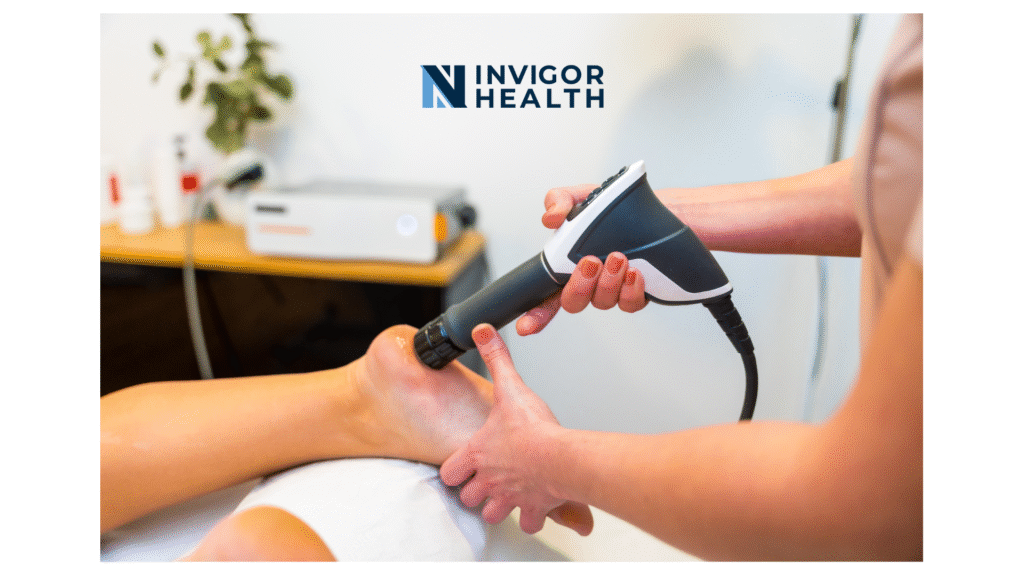
We get it — dealing with ongoing pain can be incredibly frustrating. Whether it’s that sharp heel pain every morning, a sore Achilles that flares up after every run, or a cranky elbow that just won’t settle down — it’s exhausting when nothing seems to work. That’s why we’re really excited to let you know that we’re now offering Shockwave Therapy at Invigor Health. It’s a treatment we’re adding because it can make a big difference, especially when you feel like you’ve tried everything else. So, What Is Shockwave Therapy? Great question. Shockwave therapy (technically called Extracorporeal Shockwave Therapy, or ESWT) uses focused sound waves that are delivered to the injured area to help the body heal. It’s completely non-invasive — no needles, no surgery, no long recovery times. These sound waves help: It’s quick, safe, and works well alongside the rehab exercises and hands-on treatment you might already be doing. What Can It Help With? Shockwave therapy isn’t for every injury, but it can be incredibly helpful for those stubborn ones that just won’t budge — especially if they’ve been hanging around for months. Here are a few conditions where shockwave therapy can really shine: Plantar Fasciitis That sharp, stabbing heel pain when you first get out of bed? Shockwave helps calm the inflammation and reduce that awful morning pain. Achilles Tendinopathy If your Achilles is constantly tight, sore, or flaring up after runs or long walks, this treatment can help get things moving in the right direction. Tennis Elbow If lifting, gripping, or using your arm gives you that annoying outer elbow pain, shockwave may help settle it down so you can get back to doing things without that constant ache. Calcific Shoulder Tendinopathy This one’s a mouthful, but if you’ve got calcium build-up in your shoulder causing pain or restricted movement, shockwave can help break it down and ease the discomfort. Hip Tendinopathy (Gluteal Pain) Pain on the outside of your hip, especially when lying on your side or climbing stairs? This condition is more common than people think — and shockwave has been shown to help. Jumper’s Knee (Patellar Tendinopathy) Nagging pain at the front of your knee that kicks in during squats, sport, or stairs? Shockwave could help reduce the strain and speed up recovery. Why We’ve Introduced It at Invigor Health Honestly, we’ve had so many clients come to us with long-term injuries that just haven’t shifted — despite doing all the right things. And while we’ll always be big believers in good movement, smart rehab, and strength training, sometimes your body just needs a little extra help to kickstart the healing process. Shockwave gives us another tool to support you — especially if you’ve felt stuck for a while. What’s a Session Like? A shockwave session only takes about 10 to 15 minutes. You might feel a bit of discomfort during the treatment — kind of like a tapping or pulsing — but most people find it very manageable. There’s no downtime. You can go straight back to your day afterwards, whether that’s work, the gym, or a walk by the beach. Most people notice improvement within a few sessions — usually around 3 to 6 treatments over a few weeks. Is It Right for You? Shockwave therapy isn’t a one-size-fits-all solution — and it’s definitely not a magic fix. But if you’ve been dealing with the same pain for months and haven’t had much luck with other treatments, it’s worth considering. We’ll always start with a proper assessment to see if shockwave is likely to help, and we’ll talk you through everything so you know what to expect. Want to Give It a Try? If you’re ready to explore something new, we’re now offering shockwave therapy at our Bondi Junction clinic! Come see us in Bondi Junction.Give us a call or book online — we’re here to help Whether you’ve got a long-term injury or just want to know your options, we’d love to chat and work out what’s best for you.
That Annoying Knee Pain When You Run? Here’s What You Should Know About ITB Syndrome

There’s nothing quite like finding your rhythm on a run — until that familiar twinge shows up on the outside of your knee. You slow down, hoping it’ll ease off, but it only gets sharper. Maybe you cut the run short, hoping a few days off will sort it. Then next time? It’s back again. If this sounds like you, there’s a fair chance you’re dealing with ITB Syndrome — and it’s something we see all the time here at Invigor Health, especially among runners training in the Eastern Suburbs, around Bondi Junction and Maroubra. The good news? It’s fixable — and you’re not alone. What Actually Is ITB Syndrome? The iliotibial band (or ITB) is a thick strip of tissue that runs down the outside of your thigh, from your hip to your knee. It helps stabilise your leg when you walk, run or cycle. But when it’s under too much strain, it can start to rub against the outside of your knee — and that’s when pain sets in. This usually starts off as a niggle and gets progressively sharper as you run. You might not feel it walking around, but once you hit a certain pace or distance, it flares up. That’s ITB Syndrome. Common Signs You’re Dealing with ITBS Here’s how it often shows up: A sharp, burning pain on the outside of the knee while running It usually kicks in after a few minutes or kilometres. It can get worse going downhill or downstairs It sometimes feels like a tight band down the outside of the thigh Once you stop running, the pain often eases off — until the next time It’s a frustrating cycle, especially if you’re building towards a race or trying to stay consistent with your training. Why Does It Happen? The short answer? Your body is trying to keep up with what you’re asking of it — and something’s not quite holding up its end. Here are a few common culprits: A big jump in running load — longer distances, more hills, not enough recovery Weakness in the hips or glutes, which throws off your leg mechanics Repeating the same type of run over and over (especially if it’s on uneven ground or always the same side of the road) Worn-out shoes, or shoes that just don’t suit your running style A running technique that puts too much pressure on the outside of your knee Most of the time, it’s not one single thing — it’s a combination of little things that build up. How Physio Can Actually Help At Invigor Health, we’re not just about short-term fixes — we’re here to figure out why the pain started and what it’ll take to get you back running comfortably and consistently. Here’s what treatment usually involves: A proper look at how you move We check how your hips, knees, and feet work together when you run or squat. Often the issue isn’t where the pain is — it’s somewhere upstream. A strength plan that actually makes sense for you We focus on building strength where it matters — mostly around your hips, glutes, and core — so your body can handle the loads of running without overloading the ITB. Hands-on treatment to ease tight spots That might mean soft tissue work, massage, or muscle release to calm things down while you build strength in the background. Small tweaks to how you run You don’t need to reinvent your stride, but sometimes a slight change in cadence or posture can take pressure off the outside of your knee. We’ll help you figure out what works for your body. A sensible return-to-running plan No guesswork, no boom-and-bust cycle. Just a gradual build-up that helps you stay consistent — and pain-free. And What About Foam Rolling? You’ve probably seen people roll the side of their leg like they’re trying to iron out a wrinkle. Truth is, you can’t actually “loosen” the IT band — it’s not a muscle. But foam rolling the muscles around it (like your glutes and outer quads) can help. We’ll show you how to do it in a way that actually feels good and supports your recovery. Don’t Just Push Through It If your knee’s been giving you grief every time you run, it’s probably not going to sort itself out with just a few days off. But with the right support and a bit of guidance, you can get past it — and often come back stronger than before. We’ve helped runners of all levels in Bondi Junction, Maroubra, and around the Eastern Suburbs get back on track — from first-time 5K runners to seasoned marathoners. Let’s Get You Running Again (Without the Knee Pain) If this sounds like what you’ve been dealing with, we’re here to help. Book an appointment with our physio team and let’s figure out what’s going on, what your body needs, and how to get you back out there — pain-free and confident. Invigor Health | Bondi Junction & Maroubra
Physiotherapy for Menopause Relief
As experienced physiotherapists, we understand the profound impact that the menopausal transition can have on a woman’s physical, emotional, and psychological wellbeing. This natural, yet often challenging, phase of life can bring about a multitude of symptoms, from hot flashes and night sweats to joint pain, muscle weakness, and pelvic floor dysfunction. While the medical community has long recognised the importance of hormone replacement therapy and other pharmacological interventions in managing menopausal symptoms, the role of physiotherapy in this context is often overlooked. However, at our allied health clinics, we firmly believe that physiotherapy-guided interventions can play a vital part in helping women navigate the complexities of menopause and reclaim their sense of vitality and balance. Addressing Musculoskeletal Challenges One of the key areas in which physiotherapy can be instrumental in alleviating menopausal symptoms is in addressing the musculoskeletal challenges that often arise during this transitional period. As oestrogen levels decline, many women experience a decrease in muscle mass and bone density, leading to increased risk of injury, impaired mobility, and chronic pain. Our physiotherapists begin by conducting a comprehensive assessment of each client’s physical condition, evaluating factors such as joint range of motion, muscle strength, and postural alignment. Armed with this insight, we can then develop a tailored treatment plan that incorporates a variety of evidence-based techniques, including targeted strengthening exercises, manual therapy interventions, and educational strategies to help our clients maintain optimal musculoskeletal function and prevent the onset of debilitating conditions like osteoporosis. Pelvic Floor Rehabilitation Another area in which physiotherapy can be particularly beneficial for menopausal women is in the realm of pelvic floor rehabilitation. As oestrogen levels decline, the pelvic floor muscles can weaken, leading to a host of issues such as urinary incontinence, pelvic organ prolapse, and sexual dysfunction. At our allied health clinics, our physiotherapists are highly trained in the assessment and treatment of pelvic floor disorders. Through the use of specialised techniques like pelvic floor muscle training, biofeedback, and manual therapy, we can help our clients regain control over their pelvic floor function, reduce the incidence of embarrassing accidents, and reclaim their quality of life. Addressing Circulatory and Lymphatic Challenges In addition to the musculoskeletal and pelvic floor-related challenges that can arise during menopause, many women also experience a decline in overall circulatory and lymphatic function. This can manifest in a range of symptoms, from persistent swelling and fluid retention to feelings of fatigue and lethargy. At our allied health clinics, our physiotherapists work closely with our in-house team of massage therapists to deliver a comprehensive, multidisciplinary approach to addressing these circulatory and lymphatic concerns. Through the strategic application of manual techniques like lymphatic drainage and soft tissue mobilisation, we can help to improve blood and fluid circulation, reduce inflammation, and alleviate the discomforts associated with menopause. Optimising Neurological and Vestibular Function Another area in which physiotherapy can play a crucial role in supporting women during the menopausal transition is in the optimisation of neurological and vestibular function. As hormonal fluctuations occur, many women experience an increased incidence of dizziness, vertigo, and balance-related issues, which can have a profound impact on their overall quality of life and physical safety. By incorporating a range of evidence-based techniques, such as balance training, sensorimotor exercises, and vestibular rehabilitation, our physiotherapists can help to improve the body’s proprioceptive awareness, enhance neuromuscular control, and reduce the risk of falls and other debilitating injuries. Addressing Psychological and Emotional Wellbeing While the physical and functional challenges of menopause are well-documented, it is important to recognise the profound impact that this transition can have on a woman’s psychological and emotional wellbeing. Feelings of anxiety, depression, and diminished self-confidence are all too common, and can further exacerbate the physical symptoms experienced during this time. At our allied health clinics, we take a holistic approach to supporting our menopausal clients, incorporating evidence-based strategies to address the mind-body connection. This may include the integration of mindfulness-based techniques, stress management exercises, and referrals to allied mental health professionals as needed, to help our clients develop the coping mechanisms and emotional resilience required to navigate this significant life event with grace and empowerment. The Importance of Patient Education and Self-Management Underpinning our entire approach to supporting menopausal women at our allied health clinics is a deep commitment to patient education and the development of sustainable self-management strategies. Rather than simply treating the immediate symptoms, our physiotherapists work tirelessly to equip our clients with the knowledge, skills, and confidence they need to take an active role in their own recovery and long-term wellbeing. Through personalised guidance, home exercise programs, and ongoing support, we empower our clients to become active partners in their health journey, ensuring that the positive changes they achieve during their time with us continue to serve them well beyond the scope of our professional relationship. The Integration of Complementary Therapies At our allied health clinics, we recognise that the path to optimal health and wellbeing during the menopausal transition often involves the seamless integration of various allied health disciplines. That’s why we work closely with our in-house team of chiropractors, exercise physiologists, and massage therapists to deliver a truly comprehensive, multidisciplinary approach to our clients’ rehabilitation and wellness needs. By drawing on the unique expertise of each specialist, we can ensure that every aspect of the menopause experience is addressed, from improving joint function and muscle activation to enhancing circulatory and lymphatic drainage, and supporting overall emotional and psychological resilience. Tailored Care for Lasting Results At our allied health clinics, we pride ourselves on our ability to deliver personalised, evidence-based solutions that address the unique needs and goals of each individual client. By combining our deep expertise in women’s health rehabilitation with a compassionate, client-centred approach, we are able to help our menopausal clients overcome the challenges they face, empowering them to reclaim their sense of vitality, confidence, and overall wellbeing.
Preventing Hip Pain While Sitting

For many individuals, the daily act of sitting has become a necessary, yet often uncomfortable, part of their routine. Whether you’re an office worker, a student, or someone who spends a significant portion of their day in a seated position, the biomechanical stresses placed on the hip joint can lead to a range of discomforts and mobility issues if left unaddressed. The hip joint is a complex, ball-and-socket structure that is designed to facilitate a wide range of movements, from flexion and extension to abduction and rotation. However, when the body is confined to a seated position for extended periods, the hip flexors and other surrounding muscles can become shortened and tight, leading to decreased range of motion, increased joint stress, and the potential for pain and dysfunction. Identifying the Common Causes of Hip Pain While Sitting To effectively address the issue of hip discomfort while sitting, it is essential to first understand the various factors that can contribute to its development. At our allied health clinics, our physiotherapists begin by conducting a comprehensive assessment of each client’s physical condition, taking into account factors such as joint range of motion, muscle flexibility, postural alignment, and any underlying musculoskeletal imbalances or dysfunctions. Common causes of hip pain while sitting can include, but are not limited to, tight hip flexor muscles, poor pelvic positioning and rotation, repetitive microtrauma to the joint, and even underlying conditions like arthritis or bursitis. By identifying the specific factors at play, our physiotherapists can then develop a tailored treatment plan that addresses the root causes of the issue, rather than simply targeting the symptoms. Strategies for Maintaining Hip Health and Comfort At our allied health clinics, we believe that the key to preventing and managing hip pain while sitting lies in the implementation of a holistic, multifaceted approach that empowers our clients to take an active role in their own health and wellbeing. Ergonomic Workplace Modifications One of the cornerstones of our approach is the incorporation of ergonomic workplace modifications to help reduce the strain on the hip joint and surrounding structures. This may include adjusting the height and angle of the chair, incorporating a footrest to promote better pelvic positioning, and ensuring that the workstation is optimised to support proper spinal alignment and posture. Strategic Seated Exercises and Stretches In addition to ergonomic adjustments, our physiotherapists also place a strong emphasis on the implementation of targeted seated exercises and stretches to maintain hip flexibility, strength, and overall function. By incorporating a variety of techniques, from dynamic range-of-motion drills to resistance-based strengthening routines, we can help our clients develop the necessary physical capabilities to withstand the demands of prolonged sitting. Conscious Postural Adjustments Another key component of our approach to preventing hip pain while sitting involves the cultivation of greater body awareness and the implementation of conscious postural adjustments. By teaching our clients to regularly check in with their posture, shift their weight, and make subtle, mindful changes to their seated positioning, we can help them mitigate the risk of joint stress and maintain optimal hip health. Incorporating Movement Breaks At our allied health clinics, we also recognise the vital importance of incorporating regular movement breaks into the workday to counteract the detrimental effects of prolonged sitting. Whether it’s a brief walk around the office, a few minutes of standing stretches, or a quick bout of joint mobilisation exercises, these intentional movement interludes can go a long way in maintaining hip mobility and reducing the risk of pain and discomfort. Addressing Underlying Musculoskeletal Imbalances While the immediate focus of our interventions may be on the hip joint itself, our physiotherapists also understand the importance of addressing any underlying musculoskeletal imbalances or dysfunctions that may be contributing to the issue. By taking a holistic view of the client’s physical condition, we can identify and address areas of weakness, tightness, or poor movement patterns that may be predisposing the individual to hip discomfort and limited mobility. The Integration of Complementary Therapies At our allied health clinics, we believe that the path to optimal hip health and comfort often involves the seamless integration of various allied health disciplines. That’s why we work closely with our in-house team of chiropractors, exercise physiologists, and massage therapists to deliver a truly comprehensive, multidisciplinary approach to our clients’ rehabilitation and wellness needs. By drawing on the unique expertise of each specialist, we can ensure that every aspect of the recovery process is addressed, from improving joint function and muscle activation to enhancing circulatory and lymphatic drainage. Patient Education and Self-Management Strategies Underpinning our entire approach to preventing and managing hip pain while sitting is a deep commitment to client empowerment. Rather than simply treating the immediate symptoms, our physiotherapists are dedicated to equipping our clients with the knowledge, skills, and confidence they need to take an active role in their own recovery and long-term wellbeing. Through personalised education, home exercise programs, and ongoing support, we empower our clients to develop sustainable self-management strategies that will serve them well beyond their time with us, ensuring that the positive changes they achieve are lasting and transformative. Tailored Care for Lasting Results At our allied health clinics, we pride ourselves on our ability to deliver personalised, evidence-based solutions that address the unique needs and goals of each individual client. By combining our deep expertise in musculoskeletal rehabilitation with a compassionate, client-centred approach, we are able to help our clients overcome the challenges of hip discomfort and limited mobility, empowering them to reclaim their sense of comfort, freedom, and overall wellbeing. Taking the first step towards better mobility and pain relief can make all the difference in your recovery. Book your physio appointments today at our Maroubra or Bondi Junction clinic.
Types of Physiotherapy: Know What Therapies are Included

Physiotherapy, often referred to as physical therapy, is a crucial component of rehabilitation, helping individuals regain, maintain, or enhance their movement capabilities following injuries, accidents, or the onset of health conditions. Though the journey can be challenging, typically requiring 4-6 weeks of dedicated effort, it remains a highly recommended approach for restoring lost mobility and function. Physiotherapy encompasses a range of specialised therapies, each designed to cater to distinct needs and conditions. Here, we’ll delve deeper into the various types of physiotherapy and their unique applications. Exercise Physiotherapy Exercise physiotherapy is a specialised branch of physiotherapy that focuses on the use of physical activities and exercises to help patients recover from injuries, improve their mobility, and maintain overall health. This type of physiotherapy employs a variety of targeted exercises designed to restore an injured body part to its pre-injury functionality, focusing on enhancing muscle length, building strength, and refining neuromuscular control. Exercise rehabilitation employs a range of techniques, such as strength training, stretching, balance exercises, and aerobic activities, to address various conditions and patient needs. Exercise physiotherapists work closely with individuals to create personalised exercise programs based on their specific goals, limitations, and medical history. By incorporating exercise as a key component of rehabilitation and prevention, exercise physiotherapy aims to empower patients to take an active role in their recovery and long-term well-being. Sports Physiotherapy Distinct from exercise physiotherapy, sports physiotherapy zeroes in on the unique demands and injuries associated with athletic activities. It involves the prevention, diagnosis, and treatment of sports-related injuries, while also optimising athletic performance. Tailored to the specific requirements of both professional and amateur athletes, sports physiotherapists utilise a blend of manual therapy, exercise prescription, and education to address the diverse needs of each individual. For amateur sports enthusiasts, sports physiotherapy can prove invaluable in developing proper techniques, boosting performance, and minimising the risk of injuries, enabling them to safely and effectively pursue their athletic passions. Manual Therapy Manual therapy is a specialised type of physiotherapy that addresses muscle tightness, stiffness and joint mobility issues through hands-on techniques. Physiotherapists skilled in manual therapy utilise their expertise to identify and treat knots, tension, and restricted movement within the musculoskeletal system. This therapeutic method encompasses various techniques, such as passive stretching, joint manipulation, targeted massage, dry needling and more to alleviate pain and restore functionality. By applying precise pressure and movement to the affected areas, physiotherapists can effectively release tight muscles, enhance joint mobility and promote overall musculoskeletal health, paving the way for a more comfortable and pain-free daily life. Aged Care Physiotherapy / Physiotherapy for the Elderly Aged care physiotherapy, also known as physiotherapy for the elderly, is a specialised branch focusing on the unique needs and challenges faced by older individuals. This approach aims to improve and maintain mobility, balance, strength, and overall quality of life for seniors as they age. Physiotherapists working in aged care employ a variety of techniques, including gentle exercises and pain management strategies. They design tailored programs that cater to the specific abilities and limitations of each patient, taking into account age-related factors such as joint stiffness, muscle weakness and reduced balance. Ultimately, aged care physiotherapy seeks to enhance the well-being and independence of older adults. Fall Prevention Physiotherapy Often incorporated into aged care physiotherapy, fall prevention physiotherapy is a specialised area that focuses on reducing the risk of falls. While this is regularly addressed in older adults, fall prevention physiotherapy is also applied to individuals with balance or mobility issues. By addressing the underlying factors that contribute to falls, physiotherapists help to enhance stability, coordination, and overall safety. A fall prevention program typically involves a comprehensive assessment of the individual’s risk factors, followed by the development of a customised plan that may include strength and balance exercises, gait training and functional movement activities. Physiotherapists will oftentimes provide education on home safety and proper footwear as well, to further minimise the risk of falls, ultimately promoting greater confidence and independence in daily life. Shoulder Physiotherapy Shoulder physiotherapy focuses on the diagnosis, treatment and prevention of shoulder-related injuries and conditions. By utilising a combination of manual therapy, targeted exercises, and patient education, physiotherapists aim to alleviate pain, restore mobility, and enhance function. Addressing issues such as rotator cuff injuries, frozen shoulder and shoulder impingement, shoulder physiotherapy is designed to help patients regain strength, flexibility and range of motion, enabling them to return to daily activities and sports with confidence. Disability Physiotherapy / NDIS Physiotherapy Disability (NDIS) physical therapy is a type of physiotherapy providing specialised care for individuals with disabilities, aiming to improve their mobility, function and overall quality of life. By offering personalised exercise programs, pain management techniques, and assistive device recommendations, physiotherapists empower patients to overcome physical limitations and achieve their goals. Through the National Disability Insurance Scheme (NDIS), eligible participants can access funding for physiotherapy services, ensuring they receive the necessary support to enhance their independence and well-being. Tendon Rehabilitation Tendon rehabilitation focuses on the recovery and management of tendon injuries, such as tendinitis or tendinopathy, which often result from overuse, strain or ageing. Physiotherapists employ a range of treatment approaches, including targeted exercises, manual therapy, and load management strategies, to reduce pain, promote healing, and restore function. The rehabilitation process aims to progressively strengthen the affected tendon, improve flexibility, and address biomechanical imbalances, ultimately enabling patients to return to their daily activities and sports with reduced risk of re-injury. Postural Correction Physiotherapy Postural correction physiotherapy addresses musculoskeletal imbalances and improper body alignment that can contribute to pain, discomfort, and reduced function. By utilising a combination of manual therapy, targeted exercises, and patient education, physiotherapists help individuals improve their posture and alleviate strain on muscles and joints. Generally targeting individuals with classic hunchback or swayback stances, postural correction physical therapy has the ability to profoundly improve one’s quality of life. This specialised type of physiotherapy not only reduces pain and prevents future injuries but also enhances overall body mechanics, leading to better movement efficiency, increased energy levels and
Everything You Need to Know About Hip Injury for Athletes

When people talk about hip injuries, most of the time they take it as a condition only the elderly experience. But the reality is that the hip is the most complex joint in the human body, which is located just behind the pelvis. In sports and other physical activities, the hip is what makes people move and stay on their feet. Hip problems can happen to anyone, regardless of age and gender. Sports-related hip injuries are more common among professional athletes. Basketball, football and tennis players are some of the people who are more prone to hip injuries. The hip joint is made up of a ball and socket. The ball part is called the femoral head and the socket is called the acetabulum. The ball is made of the femoral head and this joint is surrounded by the muscles of the hip and the acetabulum is made of the cartilages of the pubis and ilium bones. Any problem going on with the hip joint can result to hip injury. The problem can be minor or major. The minor problem can be relieved by resting after the injury. But, even if the injury is minor, constant training can worsen the injury. What Are the Common Hip Injuries for Athletes Here are some of the common hip injuries that any athlete can experience: Labral Tears – Also known as a hip labral tear, is common among athletes. This injury occurs when the soft tissue around the hip joint gets separated from the hip bone. Weightlifters and athletes who do squats are more prone to this hip injury. A labral tear can occur because of direct trauma to the hip when an athlete participates in sports that require jumping, landing and cutting. Torn Hamstrings – Hamstrings are the muscles on the back of your upper leg. This muscle can be torn from an injury or strain. This injury is common among football players, especially when running. Hamstring tears can also be caused by overuse, or athletes straining to increase their speed or power. Another cause of this condition is an athlete’s inability to properly stretch before training or exercise. Piriformis Syndrome – This condition is caused by an injury or an irritation of the sciatic nerve. Piriformis syndrome can be caused by an injury to the hip area because this muscle is close to the sciatic nerve. An athlete should avoid a lot of sitting, crossing the legs and standing for long periods of time. Pes Anserine Tendinopathy – Also called as Tendinopathy of the Pes Anserine. Pes anserine is the tendons that help the knee to move and bend. Acetabular Labral Tear -This injury usually occurs when the hip is twisted, in a position when the body is in improper alignment. It happens when the athlete suddenly stops running. Hip Flexor Tendonitis -This injury occurs when the muscles of the hips and the groin get inflamed. This can happen after too much pressure is applied to the muscles or when the athlete does not warm up. Pelvic Hip Pain – This can happen when the hip joint is injured. Hip Muscle Strains – This injury happens when the muscles around the hip area get damaged. This can be caused by overstraining or by muscle imbalance. How to Prevent Hip Injuries In order to prevent hip injuries, you can do two things: condition exercises and dynamic stretching. Condition exercises are the exercises that you do in a very small area. Dynamic stretching is the exercise that stretches the muscles when you are moving. They are better than static stretching because it keeps the muscles of the hips flexible. Conclusion Hip injuries are very common in athletes. It is important that athletes should protect their hips by resting, doing exercises and massaging the hips when it gets inflamed. Proper stretches and warm-ups can also help athletes protect their hips from injuries. Invigor Health provides sports physiotherapy that helps future-proof your body, fix your pain and prevent you from experiencing injuries. Let us help you stay in play and out of pain. Contact us today to get started!
Remedial Massage Therapy: What Is It and How Can It Help You?
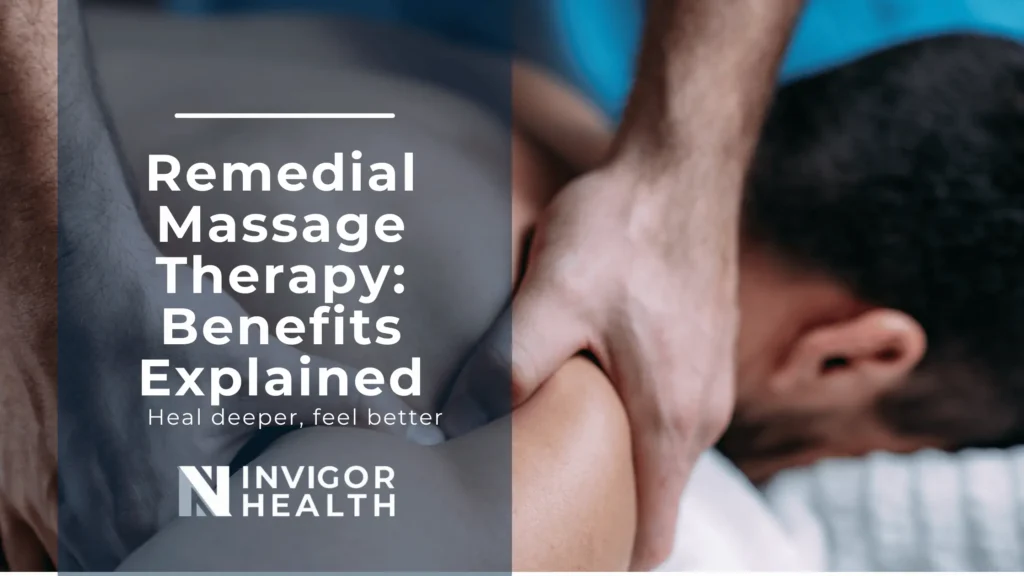
Although you may have heard of a remedial massage or seen offerings for a remedial massage at your physio clinic, you may have never had one before or never even thought to try it. Plus, if you’ve had a Thai massage or Swedish massage, you’re in for something quite different if you’ve booked a remedial massage for the first time. So explore our allied health care clinics in Sydneys eastern suburbs. So, to give you a better understanding of what remedial massages are, what to expect during your remedial massage appointment, whether remedial massage is covered by private health, and overall, how they can help you, we’re sharing everything you need to know about remedial massage: What Exactly Is Remedial Massage Therapy? Simply put, remedial massage is a type of massage therapy that focuses on problems with your body that might be causing pain. A remedial massage is also known as a problem-focused massage. You may have also heard of specific remedial massages like pregnancy, sports, or postnatal remedial massages. What Is It Good For? Remedial massage is good for addressing common muscle and joint issues. We’ve heard of people saying how their remedial massage helped with: joint pain aches and pains muscle tightness muscle knots common post-workout aches chronic pain and muscle tension You can get a remedial massage for problems that aren’t related to your muscles or joints. For example, remedial massage has been known to help with headaches, stress or anxiety, and menstrual cramps. Some people who have fibromyalgia have said that remedial massage helped them. When Should You Consider A Remedial Massage? The truth is, there’s no right or wrong time to get a remedial massage. If you’re having a problem with your body, and it’s getting in the way of your usual activities, then it’s worth considering booking a remedial massage. What Are Its Benefits? Depending on your reason for the massage, a remedial massage can help improve your flexibility and mobility. For example, if you’re having a problem with your joints or mobility, a remedial massage can help you feel more relaxed and flexible. Remedial massages are known for easing muscle tension. One of the ways that a remedial massage can ease muscle tension is by relieving muscle knots. It can speed up the healing process. For instance, if you are recovering from an injury, a good remedial massage can help reduce your pain, and swelling. It will also decrease your recovery time. What Can You Expect During a Remedial Massage Therapy Session? The massage therapist doesn’t know why you’re getting the massage, but they are trained to look out for problems or areas where your body may be experiencing pain. While you’re lying down on a massage table, the massage therapist will assess your body. They’ll ask you questions about your issues and work out where the problem is located. The therapist will then use various techniques and massage techniques to help your body. You may be offered a deep tissue massage, and you may have a more relaxing, gentle massage, or you might have a combination of the two. What’s the Difference Between a Remedial Massage Therapy and a Regular Massage? Some people compare the difference between a regular massage and a remedial massage to the difference between seeing a chiropractor and seeing a physical therapist. The regular massage works through what’s called an effleurage technique. When you’re getting a traditional massage, the massage therapist will put a little bit of pressure on your skin with their hands, and they’ll move their hands in a smooth, sweeping motion. The pressure is usually gentle. On the other hand, a remedial massage is more targeted. The massage therapist gets to work on a specific problem area, and they’ll apply more pressure. The massage therapist will use stretching movements and muscle manipulation while they’re massaging you in order to help you. Conclusion When you’re getting a remedial massage, you’ll be working with a massage therapist trained to treat your specific area of pain or problem. If you’re looking for an effective way to treat muscle pain, joint pain, or headaches, then a remedial massage from a highly-trained massage therapist can be a great choice. Invigor Health is where you can get remedial massage from trained massage therapists in Bondi Beach. We can also perform movement screening to help athletes and others prevent injury during their activities. Contact us today to set up an appointment!
How Sports Physiotherapy Can Help Running Injuries

There is no doubt that we must exercise. Running is a crowd favourite because of its numerous benefits. However, runners have to deal with an injury at one point. Thankfully, there is sports physiotherapy. You can go back to your favourite exercise in no time, but you might ask how you can avoid hurting yourself and if there is emergency treatment. If you are asking such questions, you should stick to this article. We as allied health care professionals will be able to guide you right. Basic Facts about Running Injuries Yes, it would help if you underwent sports physiotherapy. However, it is prudent to understand how running injuries happen. Injuries are characterised by pain and abnormal function of areas in the body. The most common running injuries are the runner’s knee, shin splints and Achilles tendinitis. Injuries mainly occur due to poor technique, overtraining, shoes and foot structure. You can prevent injuries if you know how they appear. People get injured while running because of poor foot positioning, shoes and technique. The most common running injuries are: Shin splints – this happens when the muscles are stressed by the impact of the foot on the ground. Runner’s knee – this is characterised by pain on the front of the knee. Achilles tendinitis – this relates to pain in the tendon of the ankle. Osteoarthritis is indicated by joint pain in the knee, hip and back. Treatment for Running Injuries Runner’s knee and shin splints can be treated by following a sports physiotherapy program. In the case of Achilles tendinitis, RICE (Rest, Ice, Compression and Elevation) is recommended to reduce the swelling and pain. Injuries among runners can be prevented if you have a correct sports physiotherapy program. You can avoid injuries by using the right shoes and strengthening your muscles. RICE treatment is the way to go if you are dealing with an injury, especially if you cannot visit a physiotherapy clinic immediately. Remember that the primary goal of this treatment is to relieve pain. Other purposes are to prevent future injuries and to help you exercise safely. Once you feel pain, you must stop running immediately and apply RICE to treat sports injuries. The best way to recover from an injury is to visit a sports physiotherapy clinic, but what should you do if you cannot do that? Here is a detailed analysis of how you can treat running injuries with RICE by yourself. You have to make sure that you are dealing with an injury before you apply the RICE technique. The first thing to do is to check if the pain is located at the site of the damage. If you do not feel pain at the injury site, your injury is not related to running. Prevention Tips Injuries are common among runners because you are putting a lot of stress on your body while running. It would help if you strengthened your muscles so that they can take the pressure. Here are some essential prevention tips: Make sure that your footwear is the right size and fits you correctly. It will help you avoid injuries. Run in a safe environment. Avoid running on a slippery surface—safe places to include the sidewalk, grass and a track. Place your feet in the correct position. It will reduce the risk of running injuries. Stretch your muscles after exercising. It will help you avoid injury. Conclusion Running is enjoyable, and it provides numerous health benefits. However, injuries are common among runners. You must pay more attention to your feet because they play a significant role in the process of running. If you are in pain, you should immediately visit Invigor Health for sports physiotherapy in Bondi Junction, Sydney. Doing so will prevent things from worsening, so you can go back to running again soon. Call us for more details.