Chest press exercise
The chest press exercise is a staple upper-body strength movement used in gyms across Sydney. It targets the major pushing muscles of the chest, shoulders, and arms. People often search for the chest press because they want stronger pecs, better technique, improved shoulder mechanics, or safer form to avoid injury.
At Invigor Health, we teach the chest press with clear, evidence-based physiotherapy principles. We focus on proper loading, joint-friendly positions, technique correction, and controlled progressions so the exercise stays safe and effective for your body. Whether you’re building strength, recovering from injury, or attending physio sessions at Bondi Junction or Maroubra, our team ensures the chest press is tailored to your needs and movement capacity.
Chest Press Exercise Explained
The chest press works the pectorals, anterior deltoids, and triceps brachii. These muscles support pushing strength, shoulder stability, and upper-body power.
This exercise matters because it helps:
- Build strength for sports involving a bat, racket, club, or swimming strokes
- Improve posture by strengthening the front of the body in a balanced way
- Enhance daily activities like pushing doors, lifting loads, carrying shopping, or getting up from low seats
- Restore muscle balance for athletes who overuse pulling muscles (rock climbers, wrestlers)
A strong chest and shoulder complex helps you train harder, move better, and reduce injury risk.
If exercises alone are not enough, our physiotherapists in Bondi Junction and Maroubra can assess your condition and tailor treatment to your needs.
Step-by-Step Technique (Physiotherapy-Approved)
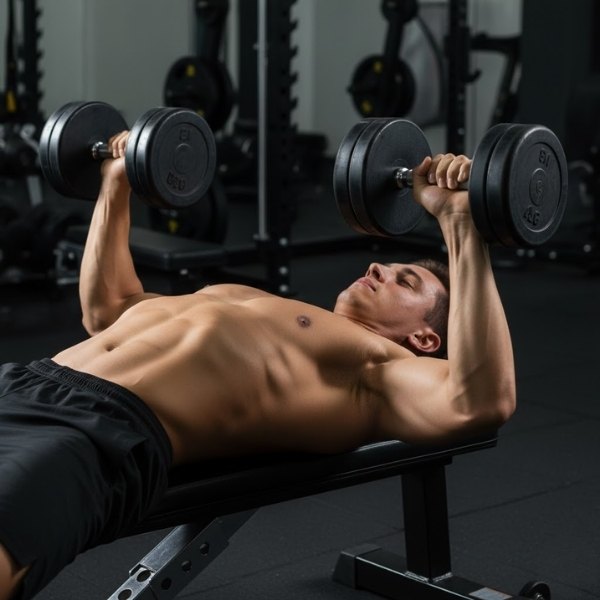
Below is the physiotherapy-approved method using dumbbells, the most accessible and most commonly used variation.
- Setup
Lie on a flat bench or the floor. Hold a dumbbell in each hand. Keep your feet grounded. - Elbow Position (45° Angle)
Position elbows slightly forward and angled at roughly 45°. This protects the shoulder joint. - Palm and Wrist Position
Palms face forward. Wrists stay straight. Wrap thumbs around the handle. - Core Connection
Engage abdominals. Maintain your natural lower-back lordotic curve without forcing the spine flat. - The Press
Push the weights up in a shallow arc. Exhale as you lift. Do not lock the elbows. - The Lowering Phase
Lower with control. Inhale. Keep shoulder blades stable and the bench contact consistent. - Pace
Move slowly. No jerking. No explosive thrusts. - When to Stop
Stop immediately if you feel chest pain, shoulder catching, arm numbness, or sharp discomfort.
If exercises alone are not enough, our physiotherapists in Bondi Junction and Maroubra can assess your condition and tailor treatment to your needs.
Common Mistakes to Avoid
Many people perform the seated chest press exercise with subtle errors that increase strain on the shoulders and reduce the exercise’s effectiveness. Here are some common mistakes:
Losing the Natural Back Arch
Many lifters press with their lower back flattened into the bench, which removes natural spinal stability. Keeping a gentle arch with ribs controlled allows the chest and shoulders to work efficiently without overloading the joints.
Using Weights That Are Too Heavy
Choosing a weight beyond your control often leads to heaving, shrugging, or compensatory movements. A manageable load ensures smooth reps, steady tempo, and safer shoulder mechanics.
Arms Positioned Too Wide
Flaring the elbows excessively places unnecessary stress on the shoulder joint. Maintaining roughly a 45-degree elbow angle keeps the movement aligned and reduces the risk of irritation or strain.
Lifting Too Fast
Rushing through reps shifts the work away from the chest muscles and into momentum. Slow, deliberate lifting helps build strength, protects the joints, and supports better technique.
Not Using a Spotter for Heavy Loads
When pressing moderate or heavy dumbbells, skipping a spotter increases the risk of dropping the weights as fatigue builds. Assistance ensures control and safety throughout the lift.
Shoulder Blades Lifting Off the Bench
Allowing the shoulders to peel off the bench weakens your base and can disrupt pressing mechanics. Keeping the shoulder blades anchored provides stability and reduces discomfort during the movement.
Benefits of Chest Press Exercise
The chest press builds more than visible chest definition. It supports long-term function:
- Pectoral Strength: Improves upper-body power and shoulder control.
- Greater Pushing Force: Useful for athletes and gym-goers across Sydney.
- Triceps Activation: Helps with pressing, holding, and carrying tasks.
- Shoulder Stability: Supports shoulder biomechanics and reduces injury risk.
- Postural Support: Balances muscles around the upper body.
- Functional Power: Helps with daily pushing tasks and load handling.
- Better Muscle Balance: Important for athletes who dominate pulling patterns (e.g., swimming, climbing).
Variations in Chest Press Exercise
Here are Variations and ways to perform the Chest Press:
1. Machine Chest Press (Beginner-Friendly)
Great for reducing form errors.
Suitable for: beginners, older adults, and post-surgical patients rebuilding strength.
2. Dumbbell Chest Press
Most versatile. Allows individual arm movement.
Suitable for: all levels, athletes, and anyone wanting balanced strength.
3. Incline Chest Press (15–30° Angle)
Targets upper chest and shoulders.
Suitable for: athletes needing upper-body power, intermediate lifters, and desk workers with shoulder instability.
4. Cable Chest Press
Smooth resistance curve.
Suitable for: athletes improving control, rehab patients needing a controlled load.
5. Standing Chest Press
More core engagement, less chest load.
Suitable for: balance training, runners, people with TVA weakness.
6. Plate-Loaded Chest Press
Stable and strong variation.
Suitable for: advanced lifters, athletes, strength-focused clients.
7. Resistance Band Chest Press
Low load, joint-friendly, ideal for home workouts.
Suitable for: early rehab, older adults in Maroubra, mobility-focused patients.
Safety, Precautions & When to See a Physio
You should speak to a physiotherapist if you notice:
- Shoulder pain while pressing
- Chest discomfort
- Weakness or asymmetry between arms
- History of shoulder surgery
- Difficulty keeping form
- Clicking, grinding, or nerve symptoms
Invigor Health’s team has deep experience working with sports injuries, tendon pain, and post-surgical rehab. We personalise technique, loading, and rehab progression so you press safely and confidently.
How Invigor Health Uses the Chest Press in Rehabilitation
At Invigor Health, the chest press is used as part of a structured, strength-led rehabilitation plan. We use it to:
- Restore pushing mechanics
- Improve shoulder stability
- Correct postural imbalance
- Rebuild upper-body power
- Strengthen after tendon or muscle injury
- Progress patients safely through load tolerance
Bondi Junction patients (younger / athletes):
We integrate chest press variations into sports rehab, strength blocks, and return-to-performance plans.
Maroubra patients (older / post-surgery):
We choose safer options like machine or resistance-band presses, focusing on slow tempo, controlled range, and gradual load increase.
Get personalised guidance, strength-based rehabilitation, and technique correction from experienced sports physiotherapists who know how to keep your body healthy for the long term.
If exercises alone are not enough, our physiotherapists in Bondi Junction and Maroubra can assess your condition and tailor treatment to your needs.
Exercise For You
Strengthening Exercises
Flexibility and Mobility Exercises
Stability and Balance Exercises
Rehabilitation and Injury-Specific
Posture and Core Activation
Neurological Rehabilitation Exercises
- Rowing Machine
- Tai Chi for Balancing
- Heel-to-Toe Walking
- Motor Control Exercises
- Coordination Drills
Post-Surgical Rehabilitation
- Shoulder External Rotation
- Hip Replacement Exercises
- Knee Replacement Rehabilitation
- Ankle Mobilizations
Breathing and Relaxation Exercises
- Diaphragmatic Breathing
- Pursed Lip Breathing
- Box Breathing
Pilates and Stability Exercises
- Pilates Leg Circles
- Pilates Roll-Ups
- Plank Variations
- Bridge with Marching
Frequently Asked Questions
How much weight should I start with?
Choose a weight you can lift for 10–12 controlled reps without strain or loss of form. If your shoulders or elbows shift, the weight is too heavy.
Does chest press help reduce chest fat?
Chest press strengthens and builds the chest muscles, but it doesn’t directly remove fat. Fat loss comes from overall activity levels and balanced nutrition.
Machine vs dumbbell chest press — which is better?
Machines are great for beginners or those in rehab because they guide your path. Dumbbells offer more freedom, helping improve balance, joint stability, and control.
Can chest press cause shoulder pain?
It can if the form is incorrect or the weight is too heavy. Any sharp or unusual pain means you should stop immediately and check your technique.
How often should I do chest press?
Most people benefit from doing chest press 2–3 times per week, allowing enough time between sessions for recovery and muscle growth.