Seated forward bend
What Is a Seated Forward Bend?
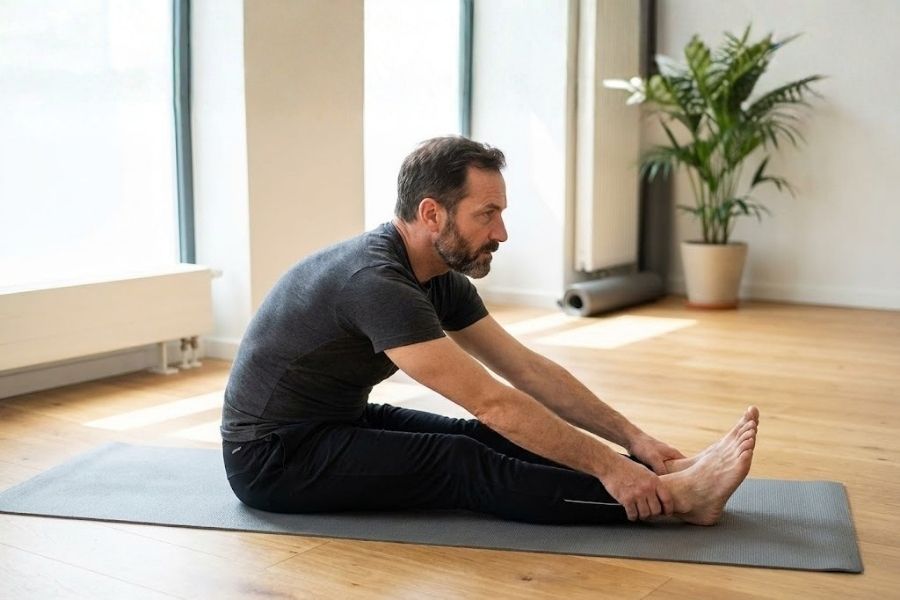
A seated forward bend, also known as Paschimottanasana, is a simple stretching exercise performed while sitting on the floor with your legs straight in front of you. From this position, you gently fold forward from the hips, bringing your upper body toward your legs.
Paschimottanasana (seated forward bend) is a controlled forward fold stretch that targets the back of the body, especially the legs and lower back. You may also hear it called a seated forward fold, sitting forward fold, or seated forward bend pose.
Despite how basic it looks, this seated forward bend exercise can feel challenging, especially if you spend long hours sitting or train regularly.
Why the Seated Forward Bend Feels Harder Than It Looks
The seated forward bend (paschimottanasana) looks like a gentle stretch, but many people struggle with it. This usually happens because of tight hamstrings, stiff hips, or a sensitive lower back.
If you sit at a desk most of the day, your body adapts to that position. If you run, go to the gym, hike, or lift weights, your muscles may be strong but not very flexible. All of this makes forward bends more difficult.
This is why the paschimottanasana pose requires patience. It is not about forcing your body down. It is about moving slowly, staying relaxed, and respecting your current range.
If exercises alone are not enough, our physiotherapists in Bondi Junction and Maroubra can assess your condition and tailor treatment to your needs.
Key Muscles Involved in Paschimottanasana
The seated forward bend stretch works several important areas:
- Hamstrings and calves
These muscles run along the back of your legs and are often tight from sitting or training. - Hips and inner thighs (adductors)
Stiff hips can limit how far you can fold forward and often cause the back to compensate. - Lower back and spine
The stretch gently lengthens the muscles along the spine when done correctly.
This combination is why front bending exercises are often used for overall flexibility rather than just one muscle group.
Benefits of Seated Forward Bend for Daily Life
The benefits of forward bending go beyond flexibility. When practiced correctly, the seated forward bend benefits include:
- Reduced stiffness from long hours of sitting
- Better tolerance for activities like walking, running, and gym training
- Improved awareness of posture and movement
- A calming effect through slow breathing and controlled movement
Many people look up paschimottanasana benefits because they want a stretch that feels effective but safe. This exercise works well when done with control rather than force.
How to Do Seated Forward Bend Safely
Here we covered the procedure of paschimottanasana in simple steps.
- Sit on the floor with both legs straight out in front of you
- Flex your feet gently and point your toes upward
- Sit tall and lengthen your spine as you breathe in
- As you breathe out, hinge forward from your hips
- Keep your back long instead of rounding
- Let your hands rest on your legs, shins, ankles, or feet
- Stop where you feel a stretch, not pain
These are the basic steps of paschimottanasana. The goal is not to touch your toes but to maintain control and comfort.
If exercises alone are not enough, our physiotherapists in Bondi Junction and Maroubra can assess your condition and tailor treatment to your needs.
Breathing and Posture During the Forward Fold
Breathing plays a big role in any forward bend exercise.
- Breathe in to lift and lengthen your spine
- Breathe out to soften into the stretch
- Avoid holding your breath
Good posture matters more than depth. A smaller fold with a straight back is safer and more effective than a deep fold with a rounded spine.
Common Mistakes to Avoid
Many people turn the seated forward pose into a strain without realising it.
Common issues include:
- Rounding the lower back to go further
- Locking the knees aggressively
- Pulling hard on the feet
- Ignoring pain behind the knees or in the back
A good rule is to feel the stretch in the middle of the muscles, not sharply near joints.
Seated Forward Fold Variations for Tight Muscles
If the standard position feels uncomfortable, seated forward fold variations can help.
- Bent knees
Slightly bending the knees reduces tension on the hamstrings and lower back. - Using a strap or belt
Looping a strap around your feet helps you maintain posture without reaching. - Sitting on a folded blanket
This raises the hips and makes folding forward easier. - Using pillows or a bolster
Resting your body on support reduces strain and allows relaxation.
These options make the seated forward fold stretch accessible for beginners and people with limited flexibility.
When to Be Careful or Modify
You should be cautious with front bending asanas if you have:
- Ongoing lower back pain
- Significant hamstring or knee discomfort
- Arthritis that affects movement tolerance
- Recent injuries
This does not mean you must avoid the exercise completely, but it should be adjusted to your comfort level.
How Long to Hold the Stretch
For most people, holding the seated forward bend stretch for 1 to 3 minutes is enough.
Shorter holds work well after exercise. Longer holds are better when the body is warm and relaxed.
Stretching should never feel rushed. Slow progress is normal.
Role of Physiotherapy in Forward Bending Exercises
While the seated forward bend exercise can improve flexibility, it does not address every movement issue on its own. Physiotherapy helps identify whether tightness is coming from the muscles, joints, or everyday movement habits. A physio can also guide how forward stretch exercises like the seated forward bend pose fit safely into a complete movement or recovery plan.
For people living or working in Sydney, especially those spending long hours at a desk or training regularly at the gym, structured physiotherapy support can make a real difference. At our physio clinic in Bondi Junction and our physio clinic in Maroubra, movement is assessed in the context of your daily routine, activity level, and physical goals.
When stretches such as paschimottanasana (seated forward bend) are guided correctly, they support flexibility without pushing the body too far. If discomfort continues or progress feels limited, working with a physiotherapist ensures the exercise helps improve movement rather than holding you back.
Preparatory and Counter Movements
Before paschimottanasana (seated forward bend), gentle hip and hamstring stretches prepare the body.
Afterward, light movements that bring the spine back to neutral or into gentle extension help balance the stretch.
This approach supports better long-term results.
Exercise For You
Strengthening Exercises
Flexibility and Mobility Exercises
Stability and Balance Exercises
Rehabilitation and Injury-Specific
Posture and Core Activation
Neurological Rehabilitation Exercises
- Rowing Machine
- Tai Chi for Balancing
- Heel-to-Toe Walking
- Motor Control Exercises
- Coordination Drills
Post-Surgical Rehabilitation
- Shoulder External Rotation
- Hip Replacement Exercises
- Knee Replacement Rehabilitation
- Ankle Mobilizations
Breathing and Relaxation Exercises
- Diaphragmatic Breathing
- Pursed Lip Breathing
- Box Breathing
Pilates and Stability Exercises
- Pilates Leg Circles
- Pilates Roll-Ups
- Plank Variations
- Bridge with Marching
Frequently Asked Questions
What is Paschimottanasana?
Paschimottanasana is the Sanskrit name for the seated forward bend pose. It is a traditional front bending exercise used to improve flexibility, posture, and body awareness. The movement is slow and controlled, making it suitable for beginners when done correctly.
How do you do the seated forward bend exercise correctly?
The basic procedure of Paschimottanasana includes:
- Sitting tall with legs extended
- Inhaling to lengthen the spine
- Exhaling to hinge forward from the hips
- Keeping the back long, not rounded
These steps of Paschimottanasana help reduce strain and improve the quality of the stretch.
What is the difference between seated forward fold and forward fold?
A seated forward fold is done sitting on the floor, while a standing forward fold stretch is performed from a standing position. The seated version offers more control and is often easier on the lower back, especially for beginners.