Chest opener exercise
A chest opener exercise is a controlled stretch designed to improve upper body flexibility by opening the front of the body. Chest tightness is common in people who spend long hours sitting at desks, working on screens, or training with repetitive pushing movements. Over time, this can lead to rounded shoulders, upper back stiffness, and postural strain.
Maintaining good upper body flexibility helps your shoulders move more freely, supports better posture, and reduces unnecessary tension through the neck and upper back.
What Muscles Does a Chest Opener Stretch Target?
Chest opener stretches mainly focus on the muscles at the front of the body while encouraging better positioning through the upper back.
They target:
- The chest and pectoral muscles, which often tighten with desk work and gym training
- The front of the shoulders, especially when shoulders sit forward
- The upper back position helps the spine sit more upright, rather than collapsed forward
This balance between the front and back of the upper body is key to comfortable, efficient movement.
If exercises alone are not enough, our physiotherapists in Bondi Junction and Maroubra can assess your condition and tailor treatment to your needs.
When Chest Opener Stretches Are Helpful
Chest stretching can be useful in many everyday situations, including:
- Prolonged desk posture or screen-based work
- Stretching after chest workout sessions at the gym
- Reduced shoulder movement or stiffness when lifting arms overhead
- General tightness across the chest and shoulders
- Preventative mobility work to maintain posture and movement quality
Many people also use chest opening exercises as part of a warm-up or recovery routine to offset daily postural stress.
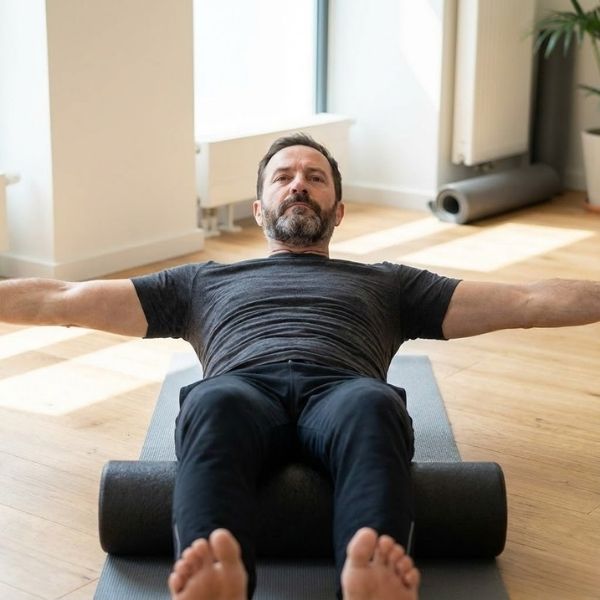
Chest Opener Exercise: Stap-by-Step (With Foam Roller)
This lying pectoral stretch is one of the most effective chest openers for upper body flexibility.
- Set up
Place a foam roller vertically along the floor. Carefully lay down so the roller runs along your spine, supporting both your back and head. Knees can be bent with feet flat for comfort. - Arm position
Start with your arms straight up in front of you, hands pointing toward the ceiling, centred above your chest. - Movement
Slowly drop your arms out to the side in line with your shoulders, allowing gravity to assist the movement. You should feel a gentle stretch through the chest and pecs. - Breathing and control
reathe steadily as the arms lower. Avoid forcing the range. Let the stretch develop naturally. - Return to centre
Bring your arms back to the centre in a controlled manner. - Tempo and repetitions
Move slowly, focusing on control rather than speed. Repeat for 8–12 controlled repetitions, staying relaxed throughout.
This chest stretch exercise works well as part of chest stretching, shoulder and chest stretch routines, or after chest workout recovery.
If exercises alone are not enough, our physiotherapists in Bondi Junction and Maroubra can assess your condition and tailor treatment to your needs.
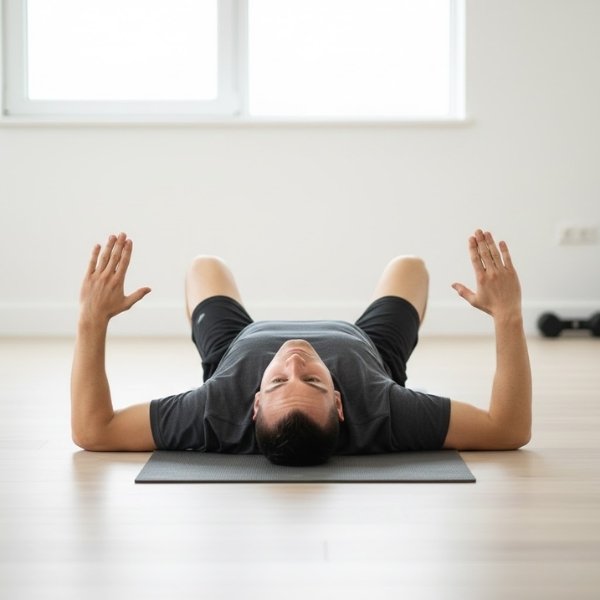
Chest Opener Without a Foam Roller (Towel Variation)
If you do not have a foam roller, a towel works as a simple foam roller alternative.
- Roll the towel lengthwise and place it along the floor.
- Lay down so the towel runs along your spine.
- Unlike the foam roller version, your head is not supported, so keep the neck relaxed and neutral.
- Start with your arms in front, then gently drop your arms in line with your shoulders until you feel a chest opening stretch.
This version still provides an effective chest opener stretch but should be performed with extra control due to reduced head support.
If exercises alone are not enough, our physiotherapists in Bondi Junction and Maroubra can assess your condition and tailor treatment to your needs.
Common Mistakes to Avoid during Chest Opening Stretches
- Overstretching or forcing the arms too low
- Arching the lower back instead of keeping a neutral spine
- Rushing repetitions instead of moving with control
- Ignoring discomfort around the shoulders or neck
Chest wall stretches should feel relieving, not aggressive.
How Physiotherapists Use Chest Openers
Chest opener stretches are not a standalone fix for posture or shoulder issues. At Invigor Health, Our Physiotherapists use chest opening stretches as part of a broader movement plan.
During assessment, physiotherapists consider:
- Shoulder control and stability
- Thoracic (upper back) mobility
- Posture habits during work, training, and daily life
By understanding why chest tightness exists, exercises such as chest openers, chest wall exercises, and shoulder and chest stretches can be used more effectively and safely.
Who Should Be Cautious
Extra care is needed if you:
- Have current or past shoulder injuries
- Experience neck pain or nerve symptoms
- Are you recovering from a recent surgery involving the shoulder, chest, or spine
If chest stretching increases pain or symptoms persist, professional guidance is recommended before continuing.
You Should Perform Chest Opening!
Chest opener stretches support upper body flexibility and can reduce feelings of tightness across the chest and shoulders. Many Sydney residents balance desk-based work with an active lifestyle that includes gym training, running, and recreational sport. This combination often leads to tight chest muscles alongside high physical demands. Chest opening stretches can help prevent injuries and support mobility, but they work best when paired with movement assessment and progression that suit your daily workload and activity level.
Physiotherapy focuses on guiding exercise choice, improving movement quality, and adjusting routines as your body adapts.
Exercise For You
Strengthening Exercises
Flexibility and Mobility Exercises
Stability and Balance Exercises
Rehabilitation and Injury-Specific
Posture and Core Activation
Neurological Rehabilitation Exercises
- Rowing Machine
- Tai Chi for Balancing
- Heel-to-Toe Walking
- Motor Control Exercises
- Coordination Drills
Post-Surgical Rehabilitation
- Shoulder External Rotation
- Hip Replacement Exercises
- Knee Replacement Rehabilitation
- Ankle Mobilizations
Breathing and Relaxation Exercises
- Diaphragmatic Breathing
- Pursed Lip Breathing
- Box Breathing
Pilates and Stability Exercises
- Pilates Leg Circles
- Pilates Roll-Ups
- Plank Variations
- Bridge with Marching
Frequently Asked Questions
How do you release a tight chest?
A tight chest can be released through controlled chest opener stretches, gentle chest wall stretches, and improved posture throughout the day. Slow stretching combined with relaxed breathing works better than forcing the stretch.
What are chest openers good for?
Chest openers are good for improving upper body flexibility, reducing rounded shoulders, easing upper back stiffness, and supporting better shoulder movement during daily activities and exercise.
Is tightness in the chest related to anxiety?
Chest tightness can sometimes be linked to stress or anxiety, but it is also commonly caused by muscle tension, posture, or training load. Ongoing or unexplained chest tightness should always be checked by a healthcare professional.
How long does it take to open up a tight chest?
Improvements vary. Some people feel relief immediately, while lasting changes usually require regular chest stretching combined with posture and movement improvements over time.