Single leg balance exercise
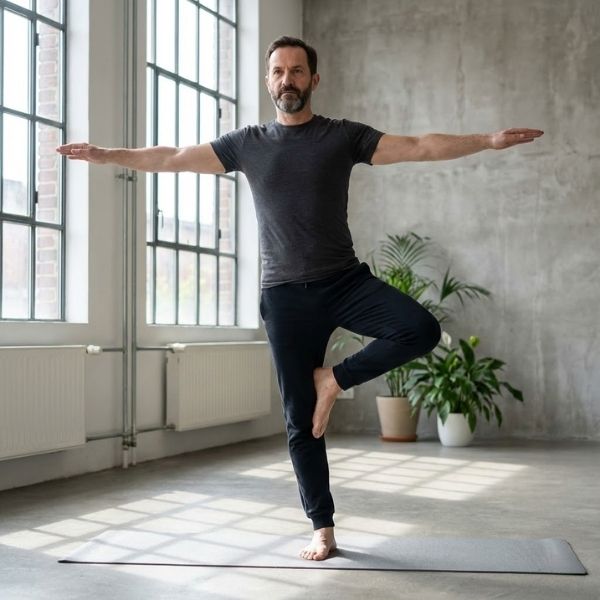
The single-leg balance exercise is a simple movement that involves standing on one leg while maintaining control and stability. People often search for this exercise to improve balance, reduce fall risk, or rebuild confidence after injury or surgery. In physiotherapy, it is commonly used to assess and train stability, joint control, and safe movement.
For people living in Sydney, everyday tasks like walking on footpaths, climbing stairs, stepping off kerbs, or staying active outdoors all rely on the ability to balance on one leg. Improving this skill supports smoother, safer movement in daily life.
If exercises alone are not enough, our physiotherapists in Bondi Junction and Maroubra can assess your condition and tailor treatment to your needs.
What Is the Single-Leg Balance Exercise?
Single-leg balance is a functional movement, not a fitness challenge. It means standing on one leg while keeping your body upright and controlled.
This exercise trains proprioception, which is your body’s ability to sense where it is in space. Proprioception helps your brain receive information from your joints and muscles so you can adjust quickly and stay steady. Physiotherapists assess and train single-leg balance because it reflects how well your body manages load and control during real-life movement.
Why Balance on One Leg Matters in Daily Life
Many everyday activities briefly place your weight on one leg:
- Walking from one step to the next
- Climbing stairs
- Stepping off kerbs or uneven ground
- Getting dressed while standing
- Moving on slippery or uneven surfaces
Poor single-leg balance can increase fall risk, especially as we age or after injury. Training this movement supports recovery, injury prevention, and long-term confidence without creating fear around falling.
Muscles and Systems Involved
Single-leg balance relies on several systems working together:
- Ankles and lower leg stabilisers help control small movements at the foot and ankle
- Knees and thighs support alignment and absorb load
- Hips and glutes keep the pelvis level and prevent excessive sway
- Core and trunk control maintain posture and steady breathing
- Upper body contribution helps with balance through arm position and upright posture
Each area plays a role in keeping you stable rather than tipping or wobbling.
Key Benefits of the Single-Leg Balance Exercise
When used appropriately, this exercise can:
- Improve balance and coordination
- Support joint health at the ankle, knee, and hip
- Reduce injury risk during everyday movement
- Assist in rehabilitation after injury or surgery
- Build confidence in standing and walking tasks
- Transfer directly to daily activities like stairs and walking
Benefits develop gradually and depend on correct technique and progression.
How to Perform the Single-Leg Balance Exercise Safely
- Stand upright with your weight evenly distributed on both feet.
- Shift your weight onto one leg.
- Slowly lift the opposite foot off the ground.
- Keep your chest upright and your gaze forward.
- Breathe normally and avoid holding your breath.
- Hold the position with control, then gently return the foot to the floor.
Stand near a wall, bench, or chair, so support is available if needed. Hold for a short, controlled time rather than pushing for long durations.
Common Mistakes and Safety Considerations
Common issues include:
- Rushing into the position
- Locking the knee or gripping the toes
- Slouching or leaning excessively
- Ignoring pain, dizziness, or sharp discomfort
Stop the exercise if you feel unsafe or unstable. Ongoing difficulty may indicate the need for professional guidance.
Exercise Modifications and Progressions
Modifications exist to match the exercise to your ability and stage of recovery. Easier options include using light hand support, shorter hold times, or keeping your eyes open.
Progressions may involve reducing support, gentle arm movements, or changing the surface under supervision. The aim is controlled improvement, not fatigue or strain.
When Single-Leg Balance Is Used in Physiotherapy
Our Physiotherapists in Bondi Junction commonly use this exercise for:
- Ankle sprains and instability
- Knee rehabilitation
- Hip stability training
- Post-surgical rehabilitation
- Fall-prevention programs
- Preparing for return to sport or activity
At Invigor Health, Single leg balance exercice is usually part of a broader rehabilitation plan rather than a standalone solution.
When to Seek Physiotherapy Guidance
Professional input may help if you experience:
- Ongoing instability or frequent near-falls
- Recurrent falls
- Recovery after surgery
- Pain during balance tasks
- Neurological or complex joint conditions
Guidance ensures these active exercises are appropriate and safely progressed. discomfort is not.
If exercises alone are not enough, our physiotherapists in Bondi Junction and Maroubra can assess your condition and tailor treatment to your needs.
Exercise For You
Strengthening Exercises
Flexibility and Mobility Exercises
Stability and Balance Exercises
Rehabilitation and Injury-Specific
Posture and Core Activation
Neurological Rehabilitation Exercises
- Rowing Machine
- Tai Chi for Balancing
- Heel-to-Toe Walking
- Motor Control Exercises
- Coordination Drills
Post-Surgical Rehabilitation
- Shoulder External Rotation
- Hip Replacement Exercises
- Knee Replacement Rehabilitation
- Ankle Mobilizations
Breathing and Relaxation Exercises
- Diaphragmatic Breathing
- Pursed Lip Breathing
- Box Breathing
Pilates and Stability Exercises
- Pilates Leg Circles
- Pilates Roll-Ups
- Plank Variations
- Bridge with Marching
Frequently Asked Questions
Is standing on one leg good for balance?
Yes. It challenges balance systems used in daily movement when done correctly.
Can single-leg balance exercise help prevent falls?
It can support balance and coordination when included in a broader program.
Is single-leg balance safe after injury?
Often yes, but timing and progression should be individualised.
Should balance exercises cause discomfort?
Mild effort is normal. Pain or sharp discomfort is not.