Pelvic tilts exercise
Pelvic tilts are one of the most commonly prescribed exercises in physiotherapy. They look simple. But when done correctly, they play a major role in pelvic alignment, core control, and low back pain management.
If you have been told you have an anterior pelvic tilt, a posterior pelvic tilt, or a generally tilted pelvis, pelvic tilts are often the first exercise used to regain control of your pelvic position.
We’ve explained what a pelvic tilt is, why it matters, and how to perform pelvic tilt exercise progressions safely and correctly.
What Is Pelvic Tilt
A pelvic tilt refers to the position of the pelvis in relation to the spine and hips. Your pelvis is not fixed. It can rotate forward and backward. This movement is known as pelvic rotation.
A normal pelvic tilt allows the lumbar spine to move and load evenly. A tilted pelvis can change spinal loading and muscle activation.
Types of Pelvic Tilt
There are three main pelvic tilt types.
Anterior Pelvic Tilt
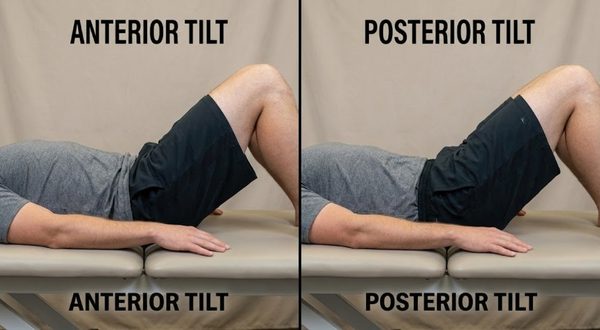
Anterior pelvic tilt occurs when the pelvis rotates forward. This is often called a forward pelvic tilt or pelvis tilted forward.
Common features include:
- Increased lower back arch
- Abdominal protrusion is sometimes described as an anterior pelvic tilt belly
- Altered pelvic posture during standing
Posterior Pelvic Tilt
A posterior pelvic tilt occurs when the pelvis rotates backward. This flattens the lower back and reduces lumbar lordosis.
Posterior pelvic tilt exercises are commonly used in early rehabilitation to reduce spinal compression and improve control.
Lateral Pelvic Tilt
A lateral pelvic tilt involves one side of the pelvis sitting higher than the other. This is sometimes referred to as pelvic shift, pelvic twist, or rotated pelvis.
Pelvic tilts exercise focuses primarily on anterior and posterior pelvic tilt, but awareness of lateral pelvic tilt is important in assessment.
If exercises alone are not enough, our physiotherapists in Bondi Junction and Maroubra can assess your condition and tailor treatment to your needs.
Anterior vs Posterior Pelvic Tilt
Understanding anterior vs posterior pelvic tilt is key.
- Anterior pelvic tilt increases lumbar lordosis
- Posterior pelvic tilt reduces lumbar lordosis
Pelvic tilting exercises help you move between these positions with control, rather than being stuck in one posture.
What Causes Pelvic Tilt
People often ask what causes pelvic tilt or what causes anterior pelvic tilt.
Common contributing factors include:
- Prolonged sitting
- Reduced core control
- Poor pelvic posture awareness
- Muscle imbalance patterns
- Habitual standing posture
Anterior pelvic tilt causes are often linked to reduced coordination between abdominal muscles, glutes, and spinal stabilisers rather than simple muscle weakness.
Why Pelvic Tilts Are Used in Physiotherapy
At Invigor Health. Our expert Physiotherapists in Bondi Junction uses pelvic tilt physical therapy foundation exercise. They are used to:
- Improve awareness of pelvic position
- Reduce excessive lumbar strain
- Support low back pain rehabilitation
- Prepare the body for higher-level movement
Pelvic tilt exercise benefits come from control, not force.
Muscles Involved in Pelvic Tilts
Pelvic tilts activate key stabilising muscles.
Primary Muscles
- Transversus abdominis
- Multifidus
These muscles support spinal alignment and pelvic control.
Supporting Muscles
- Gluteal muscles
- Pelvic floor
- Deep spinal stabilisers
When people search for anterior pelvic tilt muscles or posterior pelvic tilt muscles, they often miss the fact that coordination matters more than strength.
How to Perform a Basic Pelvic Tilt Exercise
This is the starting point for most pelvic tilts exercise programs.
Starting Position
- Lie on your back
- Knees bent
- Feet flat on the floor
- Arms relaxed by your sides
Movement
- Gently tilt your pelvis backward
- Press your lower back lightly into the floor
- Exhale during the movement
- Hold briefly
- Relax back to neutral
This is not a pelvic lift or pelvic thrust. It is a small controlled pelvis tilt.
Breathing and Control
Breathing matters.
- Exhale as you tilt
- Avoid breath holding
- Keep ribs relaxed
- Avoid bracing hard
This supports proper pelvic tilting rather than overusing surface muscles.
If exercises alone are not enough, our physiotherapists in Bondi Junction and Maroubra can assess your condition and tailor treatment to your needs.
Common Pelvic Tilt Mistakes
Many people struggle with pelvic tilts because of poor technique.
Common errors include:
- Using hip flexors
- Pushing through pain
- Over-flattening the spine
- Excessive pelvic lift
- Loss of breathing control
Pelvic tilt correction focuses on quality, not repetition.
Pelvic Tilt Exercise Progressions
Pelvic tilts exercise progressions increase difficulty only when control is maintained.
Pelvic Tilt With March
- One leg lifts at a time
- Pelvis stays stable
- No pelvic shift or rotation
Pelvic Tilt With Double Knee Tuck
- Both knees move toward the chest
- Requires higher core control
- Pelvic position must remain controlled
Single Leg Lowers
- One leg lowers toward the floor
- Increased demand on pelvic stabilisers
Double Leg Lowers
- Both legs lower together
- Highest demand
- Requires excellent pelvic alignment
These are pelvic tilt exercises, not abdominal workouts.
Pelvic Tilt Posture and Low Back Pain
Pelvic tilt posture influences spinal loading.
Excessive anterior pelvis tilt can increase strain on the lower back. Limited pelvic control can contribute to pain during sitting, standing, or lifting.
Pelvic tilting exercises help improve movement awareness, which is often reduced in people with chronic low back pain.
Can Pelvic Tilts Fix Anterior Pelvic Tilt?
Pelvic tilts alone do not fix posture permanently. They help restore control, which allows better movement patterns.
Correction requires:
- Consistent practice
- Movement awareness
- Progressive loading
- Individual assessment when needed
When to See a Physiotherapist?
You should consider a physiotherapy assessment if:
- Pain persists despite exercise
- Pelvic tilt exercises cause discomfort
- You feel uneven or unstable
- You suspect pelvic misalignment or pelvic rotation
At Invigor Health, our physiotherapists in Maroubra and Bondi Junction clinic, can assess pelvic alignment and movement control and provide tailored progression.
Pelvic tilts are not about forcing posture into place. They are about learning control of pelvic position.
When done correctly, pelvic tilts exercise forms the foundation for safe movement, spinal support, and long-term improvement.
If exercises alone are not enough, our physiotherapists in Bondi Junction and Maroubra can assess your condition and tailor treatment to your needs.
Exercise For You
Strengthening Exercises
Flexibility and Mobility Exercises
Stability and Balance Exercises
Rehabilitation and Injury-Specific
Posture and Core Activation
Neurological Rehabilitation Exercises
- Rowing Machine
- Tai Chi for Balancing
- Heel-to-Toe Walking
- Motor Control Exercises
- Coordination Drills
Post-Surgical Rehabilitation
- Shoulder External Rotation
- Hip Replacement Exercises
- Knee Replacement Rehabilitation
- Ankle Mobilizations
Breathing and Relaxation Exercises
- Diaphragmatic Breathing
- Pursed Lip Breathing
- Box Breathing
Pilates and Stability Exercises
- Pilates Leg Circles
- Pilates Roll-Ups
- Plank Variations
- Bridge with Marching