Cobra stretch
The Cobra Stretch exercise is a commonly used movement in physiotherapy programs designed to improve spinal extension, posture, and lower back mobility. If you spend long hours sitting at a desk, training at the gym, or dealing with ongoing back stiffness, this stretch can help restore natural movement in the spine.
At Invigor Health, we often include the Cobra Stretch as part of rehabilitation plans for patients dealing with lower back pain, spinal stiffness, and postural problems. The exercise helps encourage controlled spinal extension while promoting flexibility through the front of the body and activation through the back muscles. Our approach focuses on evidence-based rehabilitation and exercises that address the root cause of pain rather than just the symptoms.
For many people across Sydney’s Eastern Suburbs, especially desk workers, runners, and gym-goers, the Cobra Stretch can be a simple way to support spinal health when performed correctly.
What Is the Cobra Stretch?
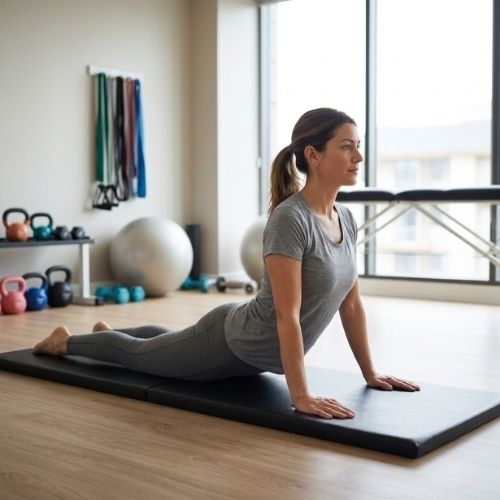
The Cobra Stretch is a spinal extension exercise where you lie face down and gently lift your chest using your arms while keeping your hips on the floor.
This movement encourages the spine to bend backward in a controlled way, which helps counteract the forward-bent posture many people develop from sitting or working on screens.
In physiotherapy, the exercise is used as part of extension-based rehabilitation programs to improve spinal mobility and reduce stiffness in the lumbar and thoracic spine.
Unlike aggressive back-bending exercises, the Cobra Stretch focuses on slow, controlled extension, making it suitable for many rehabilitation settings when guided by a physiotherapist.
If exercises alone are not enough, our physiotherapists in Bondi Junction and Maroubra can assess your condition and tailor treatment to your needs.
Muscles and Joints Involved in the Cobra Stretch
The Cobra Stretch works across several muscle groups and spinal structures that support posture and movement.
Key muscles activated or stretched include:
- Erector spinae – supports spinal extension
- Multifidus – stabilises the spine
- Rectus abdominis – stretched during the movement
- Latissimus dorsi – assists spinal movement
- Gluteus maximus – supports pelvic stability
- Hip flexors – gently stretched in the extended position
Joints and Spinal Structures
The exercise primarily affects:
- Lumbar spine
- Thoracic spine
- Facet joints of the spine
- Intervertebral discs
- Sacroiliac joints
When performed properly, the movement distributes extension across the spine rather than compressing one area.
Benefits of Cobra Stretch for Back Pain
The Sydney Eastern Suburb physiotherapists use the Cobra Stretch because of its ability to improve spinal movement and reduce stiffness.
Improves Spinal Mobility
Controlled spinal extension helps restore normal movement in the lumbar and thoracic spine, particularly in people who spend long hours sitting.
Helps Counteract Desk Posture
Desk workers often develop a forward-rounded posture. The Cobra Stretch encourages the spine to move in the opposite direction, helping reduce postural strain.
Reduces Back Stiffness
For individuals experiencing tightness in the lower back, this exercise may help improve flexibility and reduce the feeling of compression in the spine.
Encourages Healthy Movement Patterns
Physiotherapy exercises like the Cobra Stretch help retrain how the body moves, supporting better posture and spinal control over time.
How to Perform the Cobra Stretch Correctly
Performing the exercise with proper technique is important to avoid unnecessary strain on the spine.
Step-by-Step Instructions
- Lie face down on a mat with your legs extended behind you.
- Place your hands under your shoulders with your elbows bent.
- Keep your hips and pelvis relaxed against the floor.
- Slowly press through your hands and lift your chest.
- Allow your lower back to extend naturally without forcing the movement.
- Keep your shoulders relaxed and away from your ears.
- Hold the position for 10–20 seconds while breathing normally.
- Slowly lower back down.
Repeat 5–8 repetitions depending on comfort.
Breathing Tip
Breathe slowly and evenly during the stretch. Avoid holding your breath, as this can increase tension through the spine.
Common Mistakes to Avoid
Although Cobra Stretch looks simple, incorrect technique can reduce its benefits or cause discomfort.
Pushing Too High
Some people try to lift too far, forcing excessive extension through the lower back. Instead, focus on gentle movement rather than maximum height.
Tension in the Shoulders
Shrugging the shoulders toward the ears can place unnecessary strain on the neck. Keep the shoulders relaxed and down.
Overusing the Arms
Your arms assist the movement, but the spine should move naturally rather than being pushed aggressively.
Ignoring Pain Signals
A mild stretch sensation is normal, but sharp pain or nerve symptoms should not occur.
Who Should Avoid the Cobra Stretch?
While Cobra Stretch is helpful for many people, it may not be appropriate in certain situations.
You should avoid or modify the exercise if you have:
- Acute spinal injuries
- Severe disc herniation
- Spinal fractures
- Advanced spinal stenosis
- Severe nerve pain
If you are unsure whether the exercise is suitable for your condition, a physiotherapist can assess your spine and recommend safer alternatives.
Cobra Stretch in Physiotherapy Rehabilitation
Our Bondi Junction Physiotherapists use the Cobra Stretch as part of broader rehabilitation programs that aim to restore movement and improve spinal health.
At Invigor Health, exercises like the Cobra Stretch may be incorporated into treatment plans for patients experiencing:
- Lower back pain
- Postural dysfunction
- Desk-related stiffness
- Sports-related spinal tightness
Our physiotherapy approach focuses on movement education, rehabilitation exercises, and long-term injury prevention, ensuring that patients regain strength and mobility safely.
For patients in Bondi Junction and Maroubra, this type of exercise can be particularly helpful when combined with targeted physiotherapy treatment.
Variations and Progressions in Cobra Stretch
Once the basic Cobra Stretch becomes comfortable, physiotherapists may introduce progressions to increase mobility.
Low Cobra
A smaller lift that focuses on gentle spinal movement.
Full Cobra
A deeper extension with straighter arms.
Press-Up Extension
A physiotherapy progression used to encourage spinal extension and reduce stiffness.
The right variation depends on your mobility level, injury history, and rehabilitation goals.
If exercises alone are not enough, our physiotherapists in Bondi Junction and Maroubra can assess your condition and tailor treatment to your needs.
When to See a Physiotherapist?
While stretching exercises can help improve spinal mobility, persistent back pain should be assessed by a professional.
You may benefit from physiotherapy if you experience:
- Back pain lasting more than a few weeks
- Recurrent stiffness after exercise
- Pain that radiates down the leg
- Limited spinal mobility
- Difficulty returning to sport or activity
A physiotherapist can assess your movement patterns, identify the root cause of your pain, and create a personalised rehabilitation plan to restore mobility and support long-term recovery. If symptoms persist, visiting a physio clinic Maroubra can help you receive the right treatment and guidance to get back to normal activity safely.
Exercise For You
Strengthening Exercises
Flexibility and Mobility Exercises
Stability and Balance Exercises
Rehabilitation and Injury-Specific
Posture and Core Activation
Neurological Rehabilitation Exercises
- Rowing Machine
- Tai Chi for Balancing
- Heel-to-Toe Walking
- Motor Control Exercises
- Coordination Drills
Post-Surgical Rehabilitation
- Shoulder External Rotation
- Hip Replacement Exercises
- Knee Replacement Rehabilitation
- Ankle Mobilizations
Breathing and Relaxation Exercises
- Diaphragmatic Breathing
- Pursed Lip Breathing
- Box Breathing
Pilates and Stability Exercises
- Pilates Leg Circles
- Pilates Roll-Ups
- Plank Variations
- Bridge with Marching