Ankle Pumps (For ankle injury or surgery recovery)
Ankle pumps are a simple, controlled ankle movement used in physiotherapy to maintain mobility, support circulation, and reduce swelling in the lower limb.
They are commonly prescribed during early rehabilitation, periods of reduced movement, and after surgery.
This exercise looks basic, but it plays an important clinical role when movement is limited.
What Are Ankle Pumps?
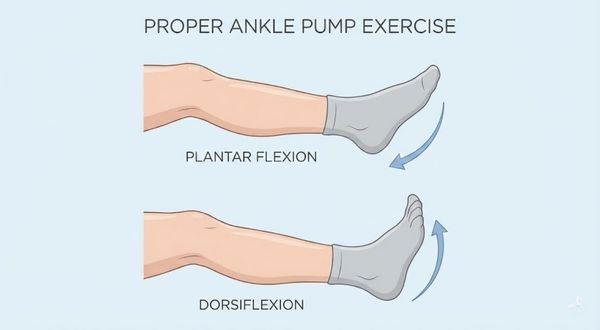
Ankle pumps involve slowly moving the ankle up and down through its available range.
The foot alternates between pointing away from you and pulling back toward you. The movement stays smooth and pain-free. There is no resistance and no speed focus.
If exercises alone are not enough, our physiotherapists in Bondi Junction and Maroubra can assess your condition and tailor treatment to your needs.
Why Ankle Pumps Are Prescribed
Ankle pumps are prescribed by our expert physiotherapists in Bondi Junction to keep the ankle joint moving when normal walking or weight-bearing is reduced.
They help:
- Reduce swelling in the foot and ankle
- Support blood flow in the lower limb
- Prevent stiffness during rest or bedtime
- Maintain early ankle movement after injury or surgery
They are often one of the first exercises introduced in rehabilitation.
Clinical Relevance and Purpose
When you stop moving your ankle, fluid can pool in the lower leg. Muscles become less active. Joint stiffness increases quickly.
Ankle pump is a rehabilitation exercise create a gentle muscle contraction in the calf and around the ankle.
This acts like a pump to assist circulation and lymphatic flow.
Clinically, this helps manage swelling, stiffness, and discomfort during periods of immobility.
Ankle pumps are commonly used for:
- People with ankle stiffness
- Swelling after injury or surgery
- Recovery after ankle, knee, or hip procedures
- Long periods of sitting or bed rest
- Early-stage rehabilitation
- Older adults managing circulation issues
They are also useful for desk workers who sit for long hours.
How the Exercise Works
The movement occurs at the ankle joint.
The calf muscles contract and relax as the foot moves.
This repeated action:
- Assists venous blood return
- Encourages fluid movement away from the ankle
- Maintains joint motion without loading the limb
The exercise should feel easy and controlled.
How to Do Ankle Pumps Properly
- Sit or lie down with your leg supported.
- Keep the knee relaxed.
- Slowly point your foot away from you.
- Then pull your foot back toward you.
- Move only as far as feels comfortable.
- Keep the movement smooth and steady.
There should be no sharp pain.
Daily Guidance
Ankle pumps are usually performed:
- 10 to 20 repetitions
- 3 to 5 times per day
They are often done more frequently when swelling is present or when movement is limited. Your physiotherapist may adjust this based on your condition.
Progressions and Regressions
If movement is limited:
- Reduce the range
- Perform the exercise lying down
- Move more slowly
As recovery improves:
- Increase repetitions
- Perform ankle pumps in sitting
- Combine with gentle ankle circles or weight-bearing exercises
Progression should remain comfortable.
Common Mistakes Patients Make
Common issues include:
- Moving too fast
- Forcing through pain
- Holding the breath
- Tensing the knee or hip
- Treating it like “strength work”
The goal is circulation and movement, not fatigue.
Safety Considerations and Contraindications
Ankle pumps should not cause pain.
Stop if you feel sharp discomfort, increasing swelling, or calf pain.
Seek assessment if:
- Swelling worsens despite movement
- Pain increases over time
- You notice calf tenderness, redness, or heat
These signs need professional review.
When to Stop or Seek Assessment
You should speak with a physiotherapist if:
- Ankle movement remains very stiff
- Swelling does not improve
- You are unsure how much movement is safe
- Walking remains painful after early rehab
Early guidance helps avoid delays in recovery.
Ankle Pumps in Physiotherapy Rehabilitation
Ankle pumps are often used early in physiotherapy programs to prepare the ankle for further movement. They are combined with mobility, strength, and balance work as recovery progresses.
At Invigor Health, ankle movement is assessed alongside swelling, strength, and function.
This helps determine when to progress exercises safely. Patients attending the clinic often use ankle pumps during early sports injury recovery.
If exercises alone are not enough, our physiotherapists in Bondi Junction and Maroubra can assess your condition and tailor treatment to your needs.
Exercise For You
Strengthening Exercises
Flexibility and Mobility Exercises
Stability and Balance Exercises
Rehabilitation and Injury-Specific
- Rotator Cuff Exercises
- Knee Extension
- Ankle Pumps
- Hip Abductor Exercise
- Clamshell Exercise
- IT Band Stretch
- Patella Mobilizations
Posture and Core Activation
- Pelvic Tilts
- Dead Bugs
- Superman Exercise
- Bracing Techniques
- Cobra Stretch
Cardiovascular Rehabilitation Exercise
- Low-Impact Walking
- Cycling
- Swimming
- Rowing Machine
Neurological Rehabilitation Exercises
- Tai Chi for Balancing
- Heel-to-Toe Walking
- Motor Control Exercises
- Coordination Drills
Post-Surgical Rehabilitation
- Shoulder External Rotation
- Hip Replacement Exercises
- Knee Replacement Rehabilitation
- Ankle Mobilizations
Breathing and Relaxation Exercises
- Diaphragmatic Breathing
- Pursed Lip Breathing
- Box Breathing
Pilates and Stability Exercises
- Pilates Leg Circles
- Pilates Roll-Ups
- Plank Variations
- Bridge with Marching
Frequently Asked Questions
Do ankle pumps help with swelling?
Yes. They assist circulation and fluid movement when the ankle is not fully weight-bearing.
How often should ankle pumps be done?
They are usually done several times per day, especially during early recovery.
Are ankle pumps safe after surgery?
They are commonly prescribed after surgery, but dosage should follow physio guidance.