Hip Abductor Exercise (Strengthening Hip Muscles)
What Are Hip Abductor Exercises?
Hip abductor exercises train the muscles that move your leg out to the side. This movement is called hip abduction. Your hip abductors work every time you walk, stand on one leg, climb stairs, or run.
If these muscles are weak or not working well, you may feel hip pain, knee pain, or instability. Many people searching for hip abductor exercises are dealing with discomfort during daily movement, gym workouts, or sports.
These strengthening exercises help improve control, balance, and lower-limb strength.
Where Are Your Abductors?
Your abductor muscles sit on the outer side of your hips. They include muscles like the gluteus medius and gluteus minimus. Together, they keep your pelvis steady and stop your knee from collapsing inward.
When these muscles are weak, your body may compensate, which can lead to hip or knee strain.
If exercises alone are not enough, our physiotherapists in Bondi Junction and Maroubra can assess your condition and tailor treatment to your needs.
Why Hip Abductor Strength Is Important for You
Strong hip abductors help you:
- Walk and run with better control
- Feel more stable on one leg
- Reduce stress on your knees
- Improve balance and confidence
- Lower the risk of injury
If you sit a lot, train at the gym, or stay active on weekends, hip abductor strengthening exercises can help your body handle load better.
They are also important after surgery, such as hip or knee procedures, when stability and strength need to be rebuilt safely.
Types of Hip Abductor Exercises
Standing Hip Abduction Exercises
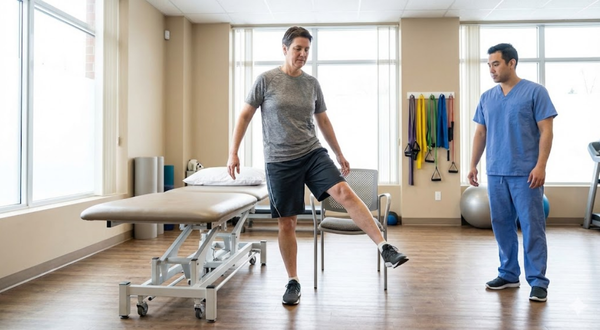
Standing hip abduction exercise options train balance and control.
They are useful because they relate closely to walking and daily movement.
Examples include:
- Standing hip abduction
- Leg abduction exercise using a band
- Hip abduction band exercise
These are good if your goal is functional strength and stability.
Side-Lying Abductor Exercises
These focus more on isolation and muscle activation.
Common options:
- Side leg raises
- Hip abductor exercise with a mini band
They are often used early in rehab or when learning how to activate the right muscles.
Gym and Resistance-Based Exercises
If you train at the gym, hip abductor exercises gym options may include:
- Hip abduction machine
- Cable hip abduction
These can help with abductor muscle workout and strength building, but they work best when combined with standing and balance exercises.
Abduction Workouts With Bands
Bands are simple and effective.
They are often used for:
- Hip abduction workouts at home
- Abductions work out before running or training
- Exercises to strengthen hip abductors without machines
Bands allow control without a heavy load.
Mobility and Recovery
Some people also benefit from:
- Gentle abductor stretch
- Light abduction exercises for movement quality
This can help if your hips feel tight or stiff, but stretching alone will not strengthen the muscles.
How to Strengthen Hip Abductors Safely
To strengthen hip abductors properly:
- Move slowly and with control
- Avoid swinging the leg
- Keep your pelvis steady
- Stop if pain increases
The best abductor exercises depend on your pain, strength, and goals. What works for one person may not suit another.
Random abductor workouts can sometimes make symptoms worse if the technique or progression is poor.
Common Mistakes People Make
Many people:
- Use momentum instead of muscle control
- Feel the exercise only in the front of the hip
- Rush resistance too quickly
- Ignore hip or knee pain
If you feel sharp pain or ongoing discomfort, the exercise may need to change.
Hip Abductor Pain Exercises and Physiotherapy
If you are searching for hip abductor pain exercises, it often means something is not working well in your movement.
Physiotherapy helps by:
- Checking how your hips, knees, and pelvis move
- Identifying weak or overworked muscles
- Choosing the right hip abductor strengthening exercises
- Progressing exercises safely
At Invigor Health Physiotherapy, programs are tailored for:
- Active adults in Bondi Junction
- Post-surgical and older adults in Maroubra
The focus is always on safe, practical movement that fits your daily life.
Who Should See a Physio?
You should consider physiotherapy if:
- Hip or knee pain keeps returning
- Balance feels poor
- Running or gym training causes flare-ups
- You are recovering from surgery
- You are unsure how to train abductors safely
If you are unsure how to strengthen hip abductors safely or your symptoms are not improving, a proper assessment can help. We offer personalised care at our physio clinic in Bondi Junction and physio clinic in Maroubra, focused on movement quality, not generic exercise sheets.
If exercises alone are not enough, our physiotherapists in Bondi Junction and Maroubra can assess your condition and tailor treatment to your needs.
Exercise For You
Strengthening Exercises
Flexibility and Mobility Exercises
Stability and Balance Exercises
Rehabilitation and Injury-Specific
- Rotator Cuff Exercises
- Knee Extension
- Ankle Pumps
- Hip Abductor Exercise
- Clamshell Exercise
- IT Band Stretch
- Patella Mobilizations
Posture and Core Activation
- Pelvic Tilts
- Dead Bugs
- Superman Exercise
- Bracing Techniques
- Cobra Stretch
Cardiovascular Rehabilitation Exercise
- Low-Impact Walking
- Cycling
- Swimming
- Rowing Machine
Neurological Rehabilitation Exercises
- Tai Chi for Balancing
- Heel-to-Toe Walking
- Motor Control Exercises
- Coordination Drills
Post-Surgical Rehabilitation
- Shoulder External Rotation
- Hip Replacement Exercises
- Knee Replacement Rehabilitation
- Ankle Mobilizations
Breathing and Relaxation Exercises
- Diaphragmatic Breathing
- Pursed Lip Breathing
- Box Breathing
Pilates and Stability Exercises
- Pilates Leg Circles
- Pilates Roll-Ups
- Plank Variations
- Bridge with Marching
Frequently Asked Questions
What are the best exercises for hip abductors?
The best hip abductor exercises are side leg raises, standing hip abduction, banded lateral walks, and hip abduction machine exercises. These help improve strength, balance, and control.
What are signs of weak hip abductors?
Common signs include hip pain, knee pain, poor balance on one leg, pelvic dropping while walking, and feeling unstable during stairs or running.
What does working out your hip abductors do?
Working out your hip abductors improves hip stability, supports better knee alignment, reduces injury risk, and helps you move more confidently during daily activities and exercise.